The byways of England
A family wedding this summer at a place called Bredenbury which is… well in the middle of nowhere really, in the west of central England, SW of Birmingham, was the occasion to discover a part of the British Isles I’d never been to before.
The first thing that struck me was: “why on earth would anybody want to live in a place where every road is no wider than a cattle track but where locals drive as though they were on motorways?” I had a rental car and, as is my wont, had not taken out any extra insurance unaware of the extremely high likelihood that the sideview mirrors would get ripped off either by a passing vehicle or by the hedges. In the event, the car came through unscathed!
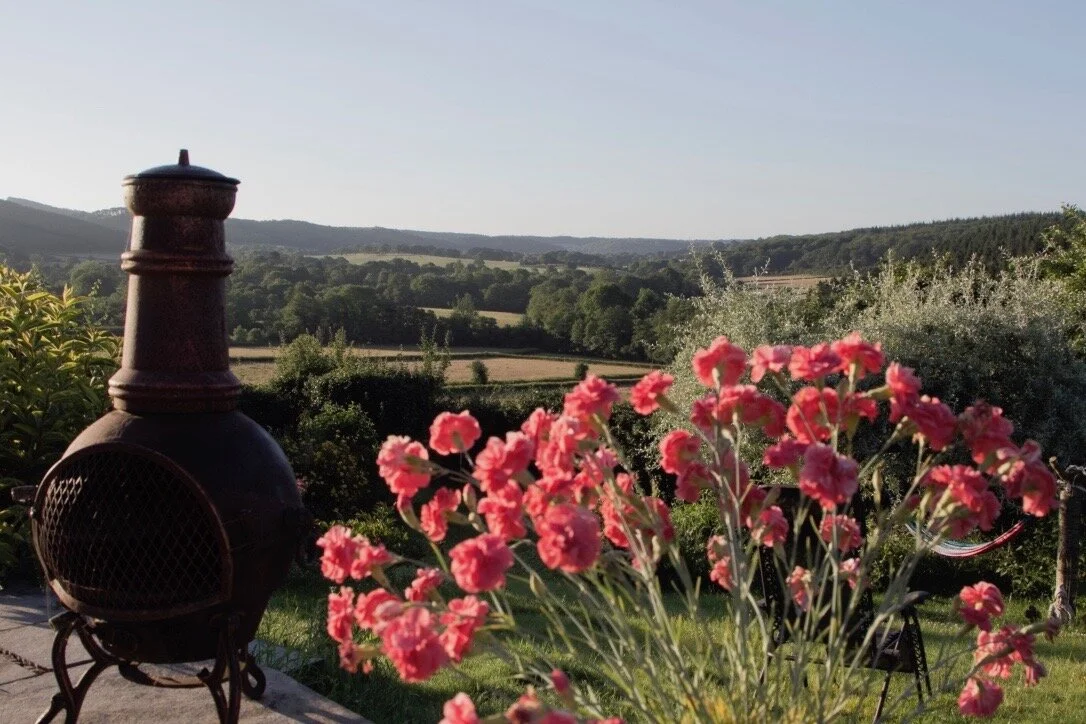
The tranquil view from our house-swap
The second thing that struck me was the complete absence of human-originated noises at the house we were staying in, whose owner, Debbie, was swapping it for a few days against staying at our place in the Alps next April. We were blessed during this week in late June with glorious weather (25ºC every day!) so made full use of her huge terrace with views across a shallow valley to the hills that rimmed the horizon. We could hear no cars, no airplanes, no voices: only the tinkle of the bells around the sheep’s necks and their occasional bleating. Once we heard a deer call and in the evening we could see the owls gliding past on their way to dinner somewhere. Every day two buzzards amused themselves on the warm air rises, one coming down to rest for a few moments atop of a shrub at the edge of “our” garden. And because of the absence of aircraft there were no contrails to spoil our view of these birds of prey.
The Mappa Mundi
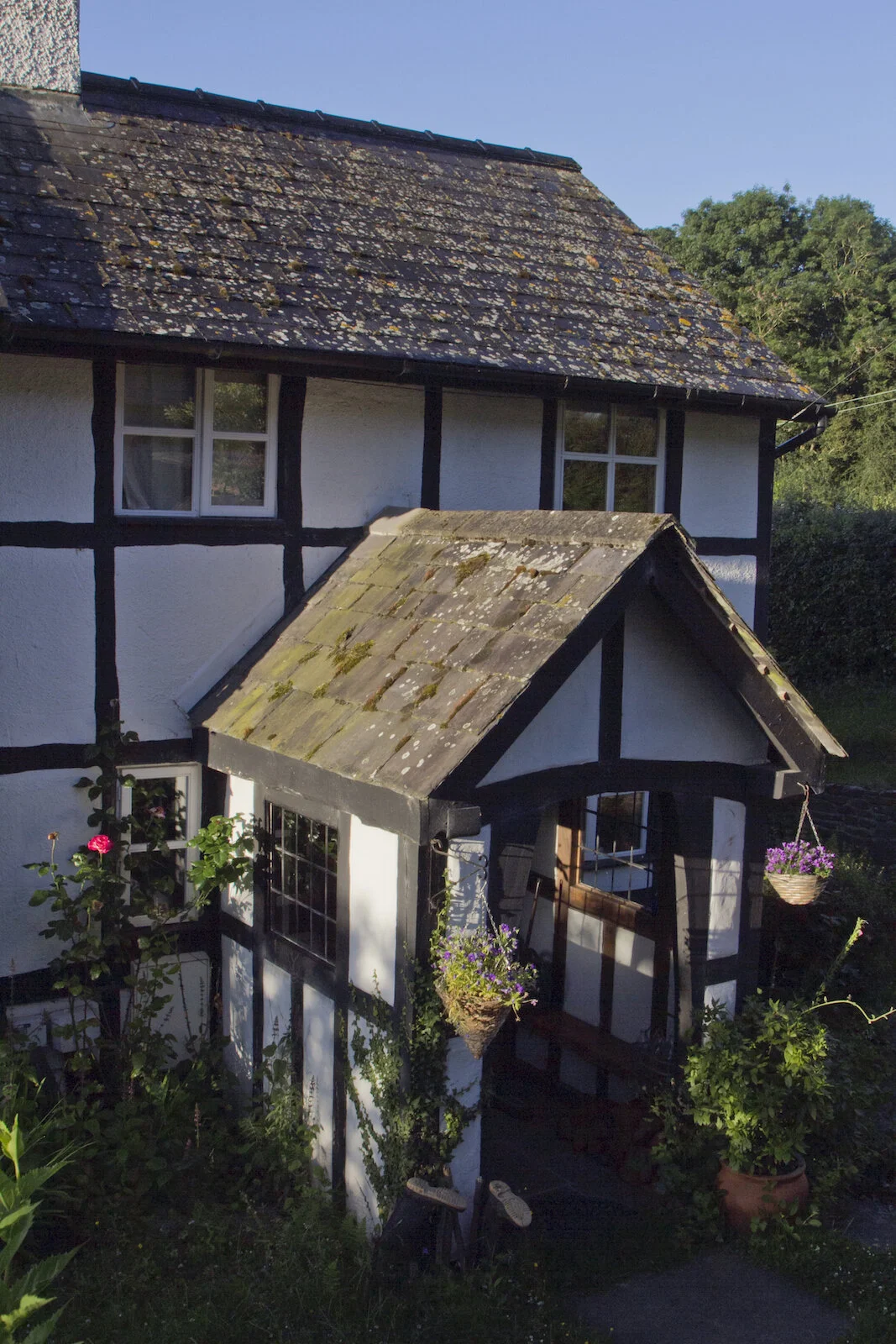
We never did find the village, Checkley, that the house is supposed to be in! Perhaps it’s just those few houses along that tiny little road?
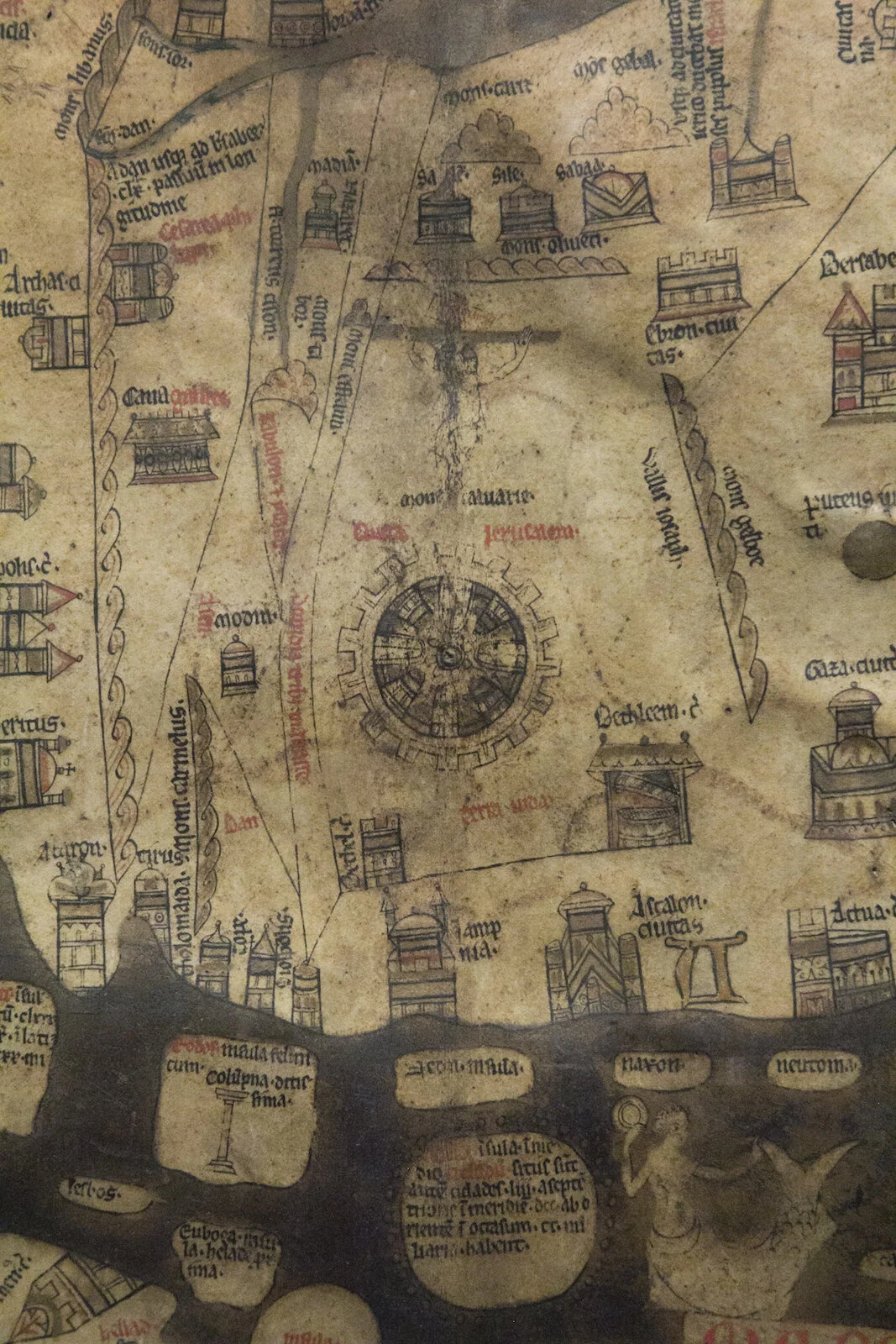
A clear explanation of the Mappa Mundi in the museum.
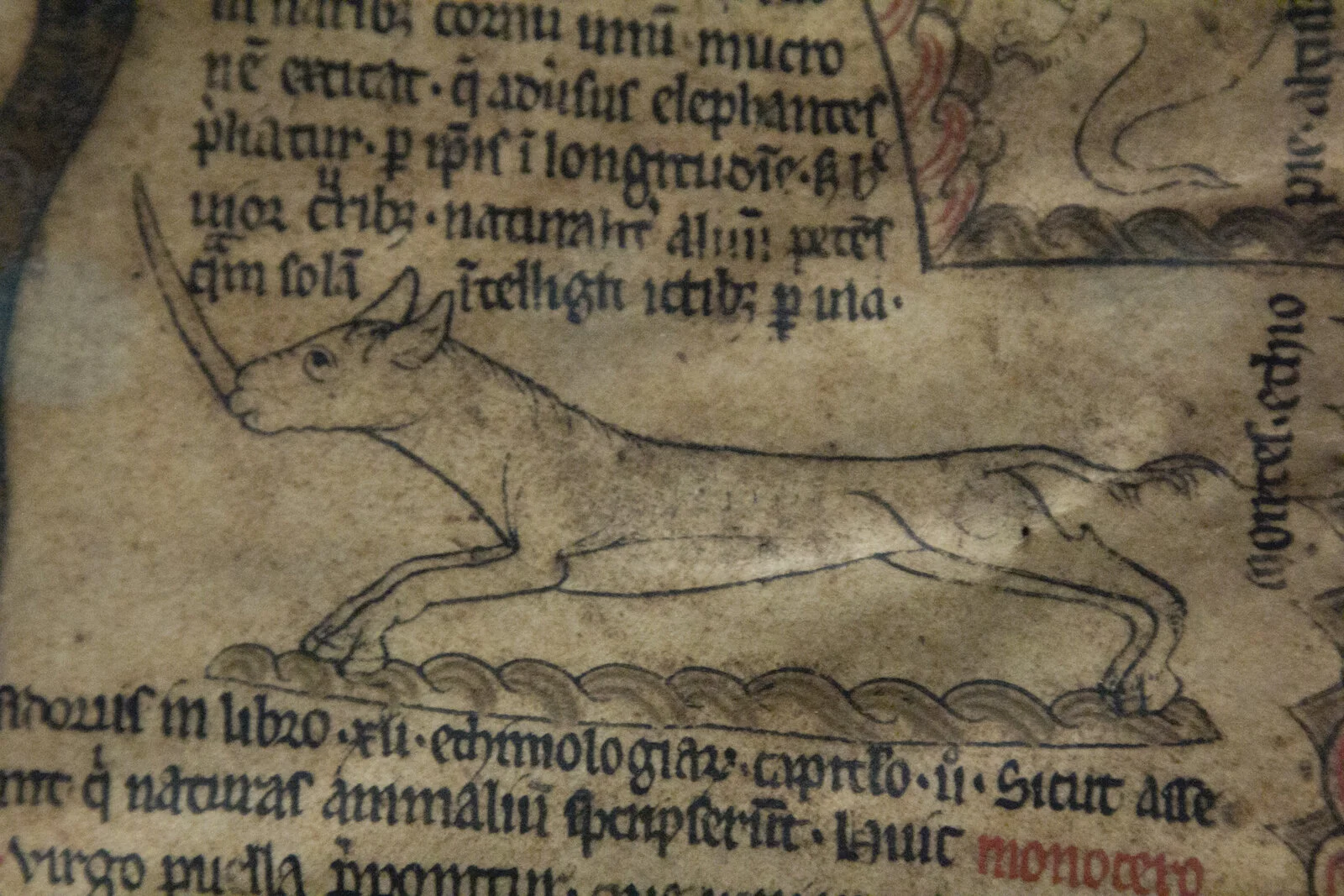
The two nearest towns are Worcester and Hereford, both cathedral cities. The world’s biggest and best preserved (it’s actually intact) Medieval map is exhibited in Hereford cathedral. Known as the Mappa Mundi, the map was painted in around 1300 on a single piece of parchment 1.52m high and 1.20m wide. The map doesn’t look like any map I’d ever seen before but fortunately visitors are prepared in the very good, small museum they must walk through before reaching the dim room where the map is on view. So I knew that I would find Jerusalem in the centre and that the north would be to the right. Europe is in the left-hand bottom corner, Africa on the other side and Asia occupies the whole top section. There are no Americas, obviously, as those continents would not be officially discovered by Europeans for another 192 years or so. And no Australasia either. Nevertheless, once one’s eyes get used to the dim light it’s still very hard to understand what is what. Fortunately, a very nice guide stands by in the room to answer any question you may wish to throw at her, helped in her task by a very large book! We must have have spent almost half an hour looking at the map which is incredibly entertaining thanks to its 500+ drawings (how on earth did they know about rhinoceri?) and 1,000 or more phrases written in Latin and French.
This little bear is looking very bashful! Has he been naughty?
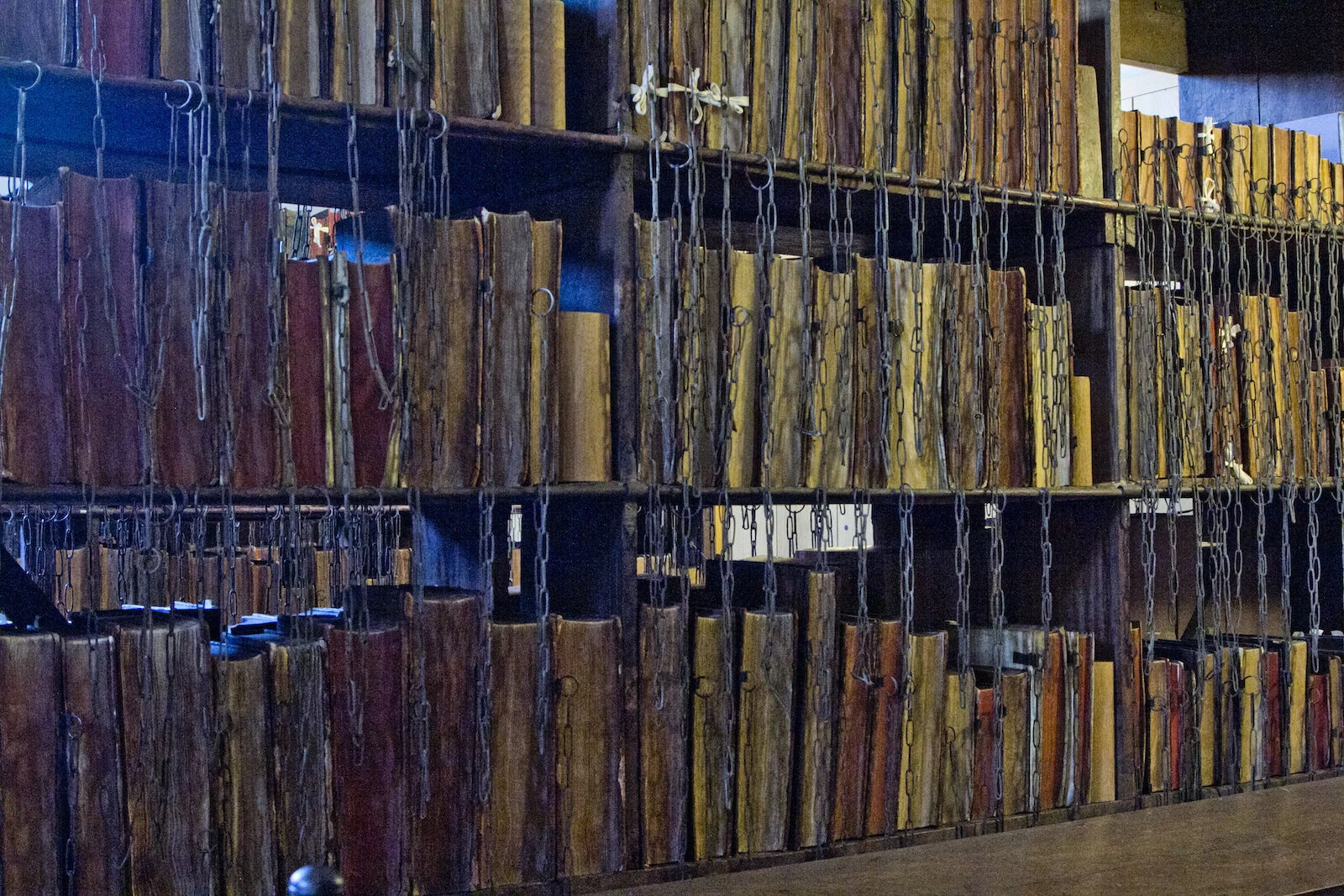
Visitors move out of the Mappa Mundi room into the 17th Century Chained Library, the largest European chained library to survive with all its chains, rods and locks intact. Chaining books was a widespread security system in European libraries from the Middle Ages to the 18th Century. Here’s how it worked: one end of a chain is attached to the front cover of each book; the other end is slotted onto a rod that runs along the bottom of each shelf. The books are shelved with their pages, rather than their spines, facing the reader thus allowing the book to be lifted down and opened without tangling the chain. So the reader could take a book from the shelf and read at the desk, but could not take remove it from the bookcase.
The cathedral’s earliest and most important book is the 8th-century Hereford Gospels; it is one of the 229 medieval manuscripts which now occupy two bays of the Chained Library.
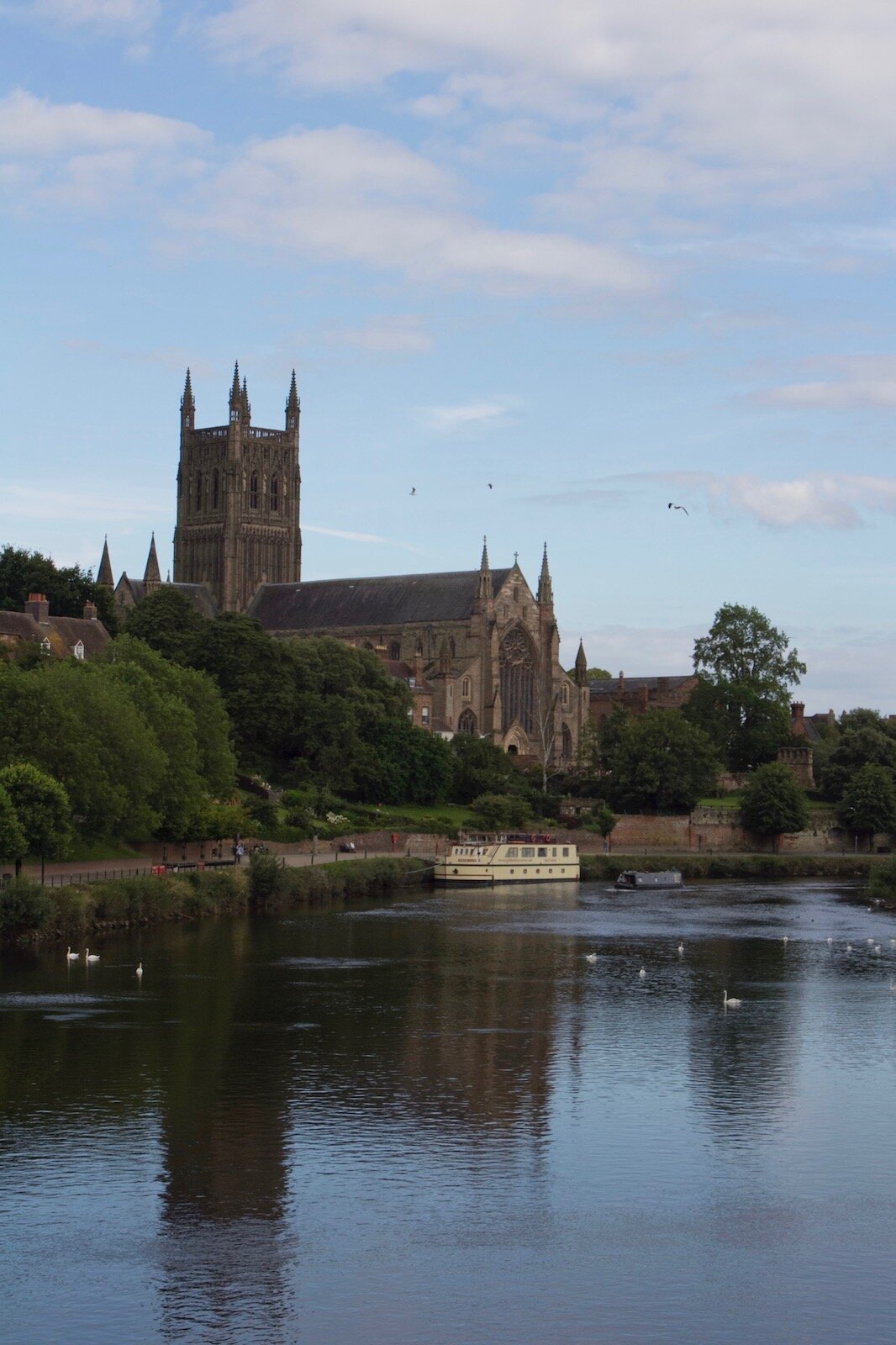
The 11th Century Worcester cathedral doesn’t have as many treasures but it is spectacularly set on one of the banks of the River Severn. So we sat there and gorged on a cream tea (scones, jam and clotted cream for those of you who’ve never had one!) arguing amiably about whether the jam should go below or on top of the clotted cream.
The Cottage of Content pub
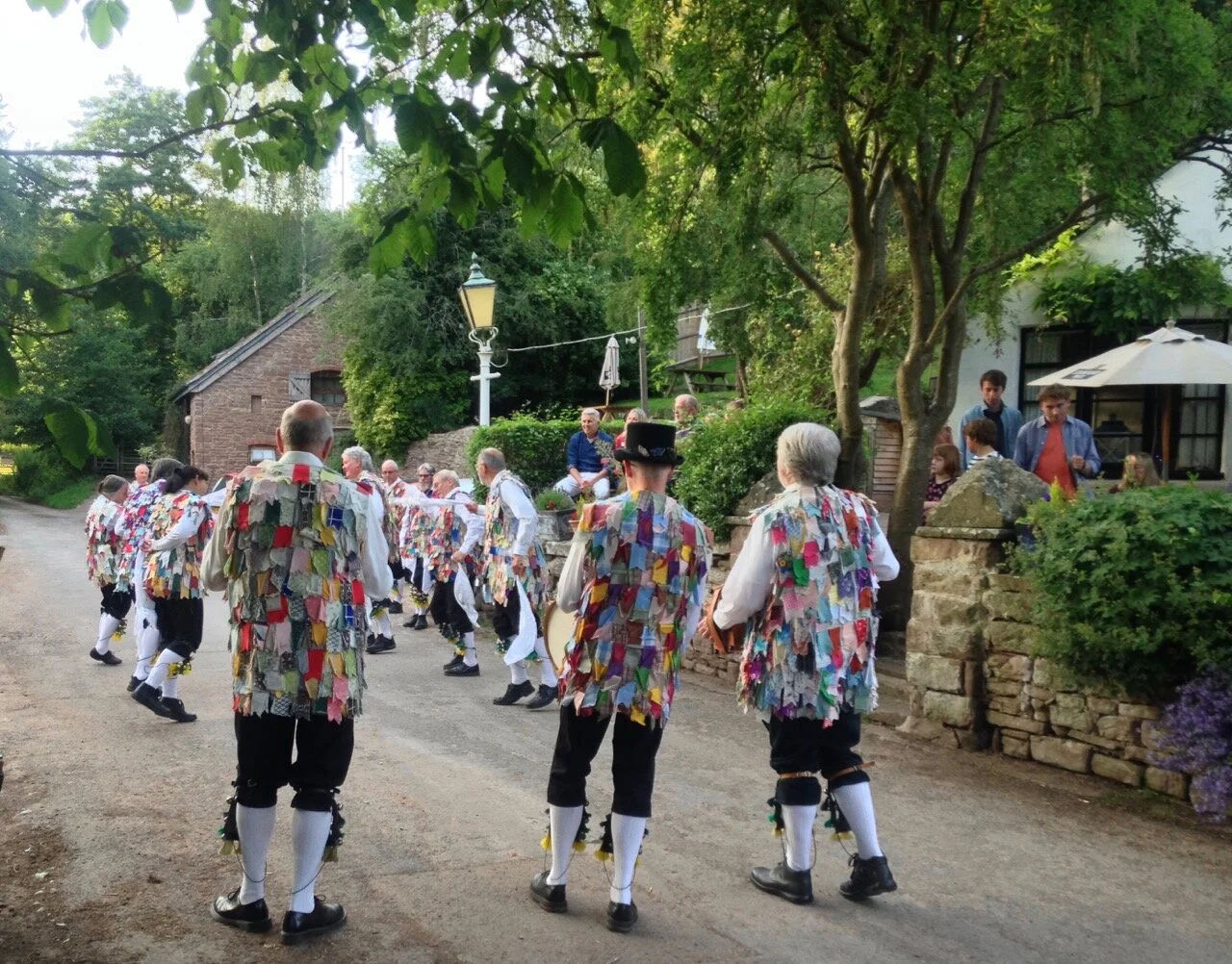
Apart from cream teas, the best food to be had in England is in pubs. So one evening we headed off to the aptly named Cottage of Content in the hamlet of Carey, down roads so narrow (grass was growing down the centre!) that I thought our satnav was taking us up a private road into a farm. But no, we eventually emerged onto a very slightly bigger road and there on a corner, looking for all the world like a stage-set, was the pub, complete with Morris Dancers prancing around in the front! I was struck by the thought that this place probably looked almost exactly the same in Shakespeare’s day and then by the thought that the people who live here are a million miles from big city concerns. I wonder how they voted in the Brexit referendum?