A second cruise down the Nile
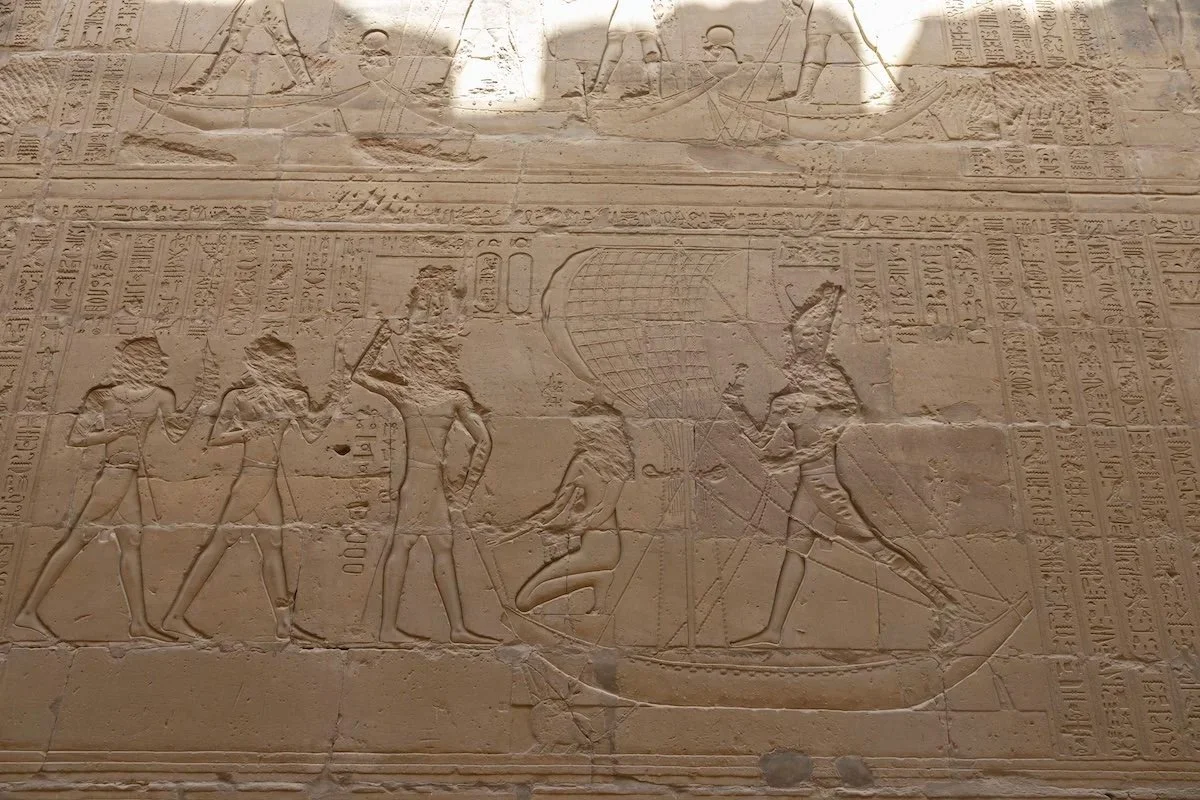
The main photo shows a carving at the Temple of Horus in Edfu of the falcon-headed god Horus with Isis kneeling in front of him on a sailing boat arriving at quayside having avenged his father's murder in a battle with his uncle, the god Seth, depicted as a hippopotamus below the boat. Horus holds the hippo with chain and spear.
Is it worth going on a cruise on a similar boat to one you’ve sailed on before, up the same river (the Nile), visiting ostensibly the same places and just two years apart? Having just done so, I can say from experience: most definitely yes!
Read on to find out why.
As I mentioned in my previous blog post which you can read here, I’d learned from my earlier Nile cruise (which you can read about here) that it’s nice to arrive in Luxor three or four days before your cruise departs to get a feel for the town and see all the things you won’t be seeing with the cruise guide (ask the cruise organisers what they’ll be showing you in Luxor).
The Nile on the Nile
So after three nights and two full days exploring the town, we settled into our cabins on The Nile. That name, incidentally, makes it very hard to find on the internet because the first dozens of answers are about the river or hotels or restaurants or other cruises but not this particular dahabiya or the eponymous company which runs it. They might like to find a more unique name. Just saying.
The boat is operated in partnership with The Egyptian Company for Sailing Ships based in Cairo, which also owns Voyageurs (not to be confused with the French company Voyageurs du Monde), an Egyptian tour-operator specializing in serving the French, Canadian, and British markets. The company owns a second, smaller dahabiya (maximum 14 passengers) called the Fleur.
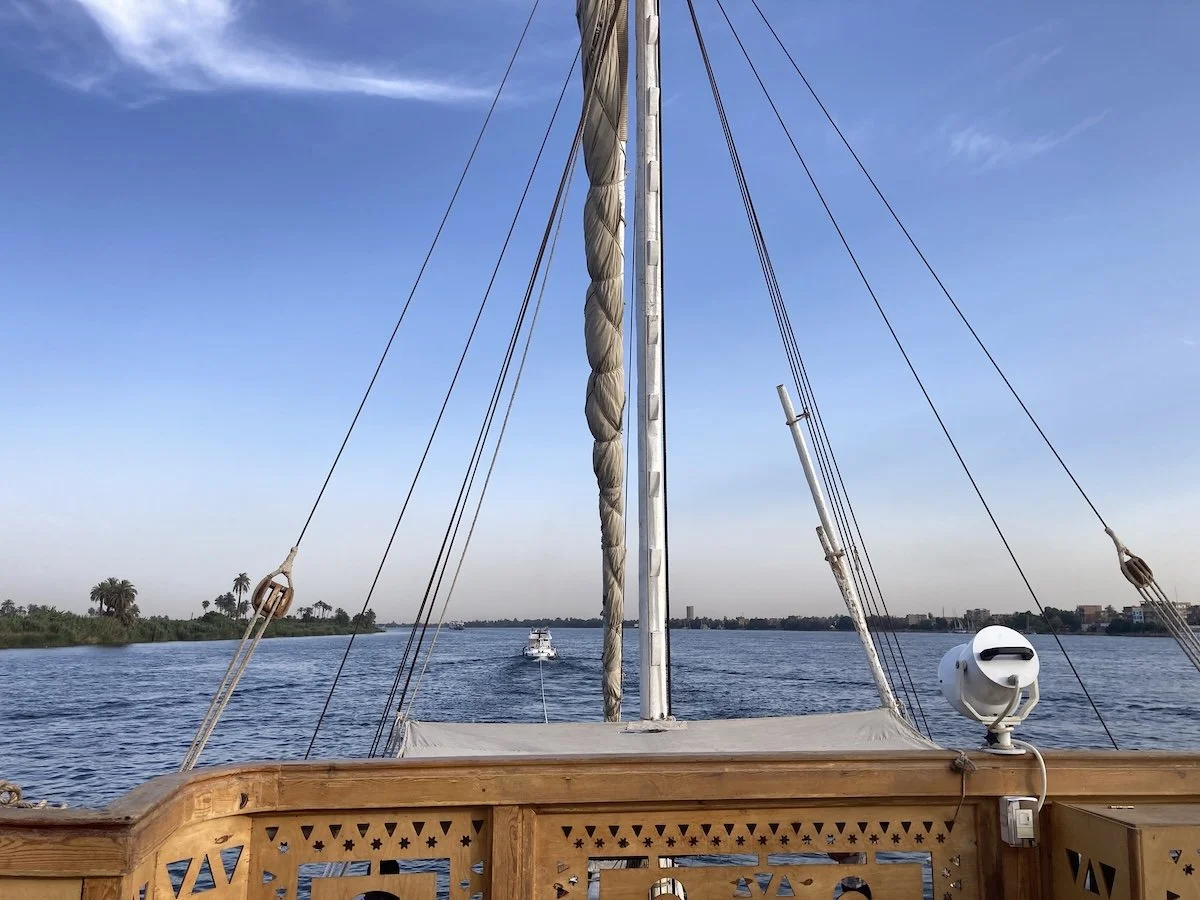
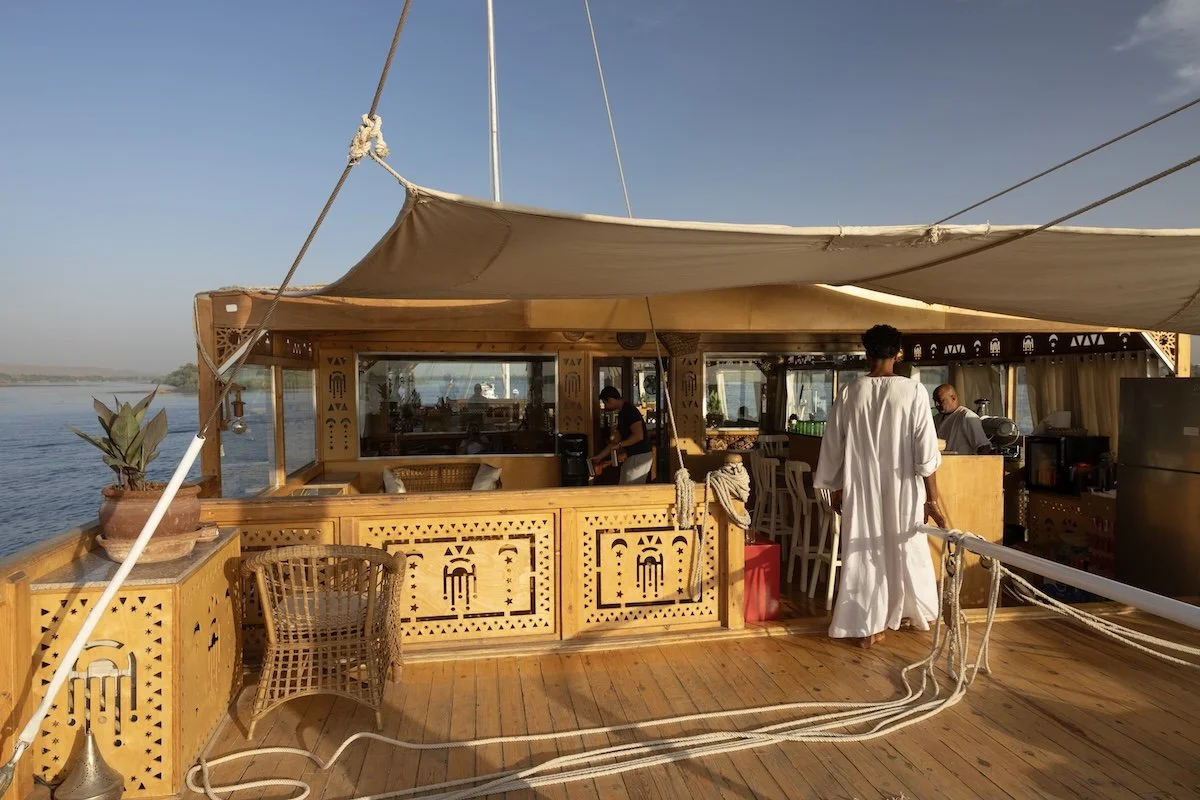
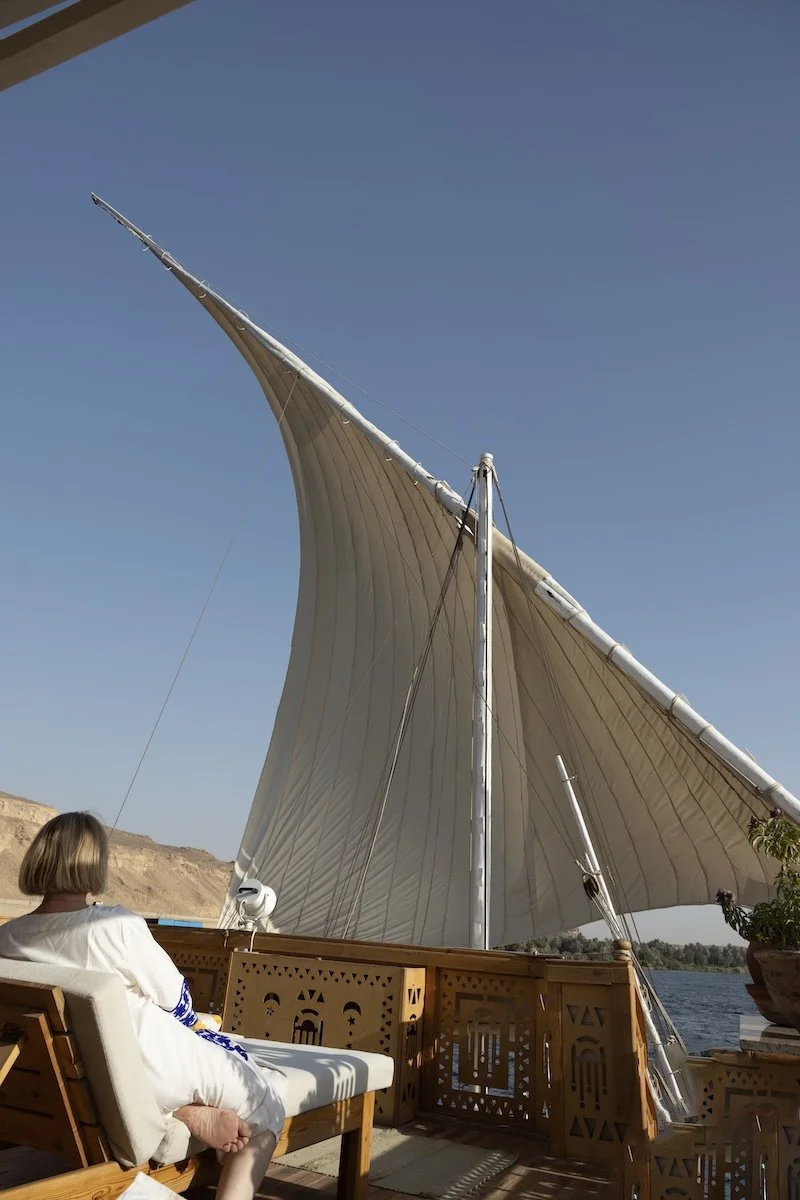
The Nile is a newly built boat designed by a French interior designer along traditional 19th century dahabiya plans. I found it less elegant than the first dahabiya I’d been on, but then on this boat we had hot water and only one person, instead of the whole passenger-list, got traveller's diarrhoea. So I guess that makes up for a less pleasing colour scheme!
The air-conditioned lounge area but which was rarely used during the day, passengers preferring to be outside in late May. I was told, however, that the lounge area is frequently used during the winter months when it gets too chilly in the evenings to comfortably sit outdoors.
The exterior decoration is inspired by the Nubian culture of Upper Egypt with its ubiquitous triangles and green, yellow, red and blue colour scheme. The main deck and cabins are all light-coloured wood, a touch of colour provided by cushions. The boat has two panoramic suites, eight twin-bed cabins and two king-bed cabins hosting a maximum of 24 people. But on this, the last trip of the season before The Nile’s summer maintenance break, there were only 11 of us on board including a young Frenchman who knew one of my friends from Shanghai. Small world indeed! However, even if there’d only been one of us the boat would have sailed. Ahmed Awad, the marketing manager. told me in an e-mail that “there is no minimum number of guests required for a cruise to operate. Even with one guest the cruise is considered confirmed. This is one of our advantages compared to many competitors.”
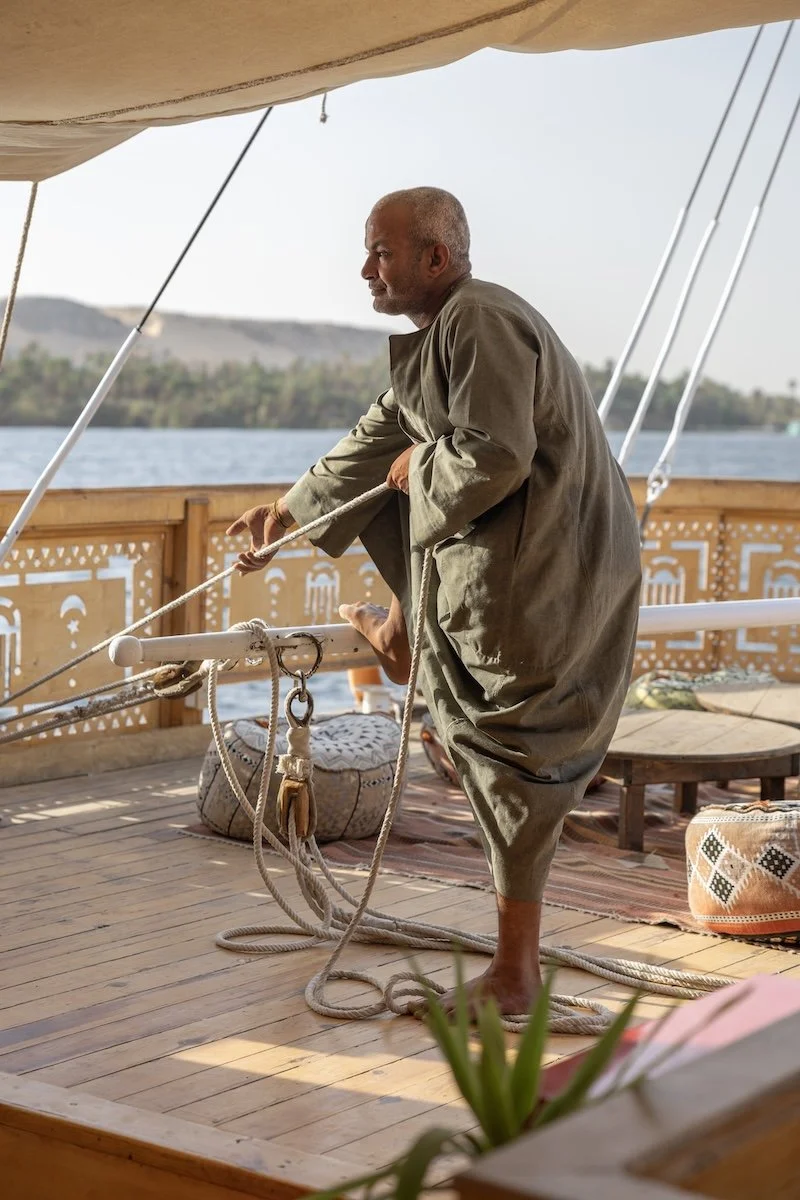
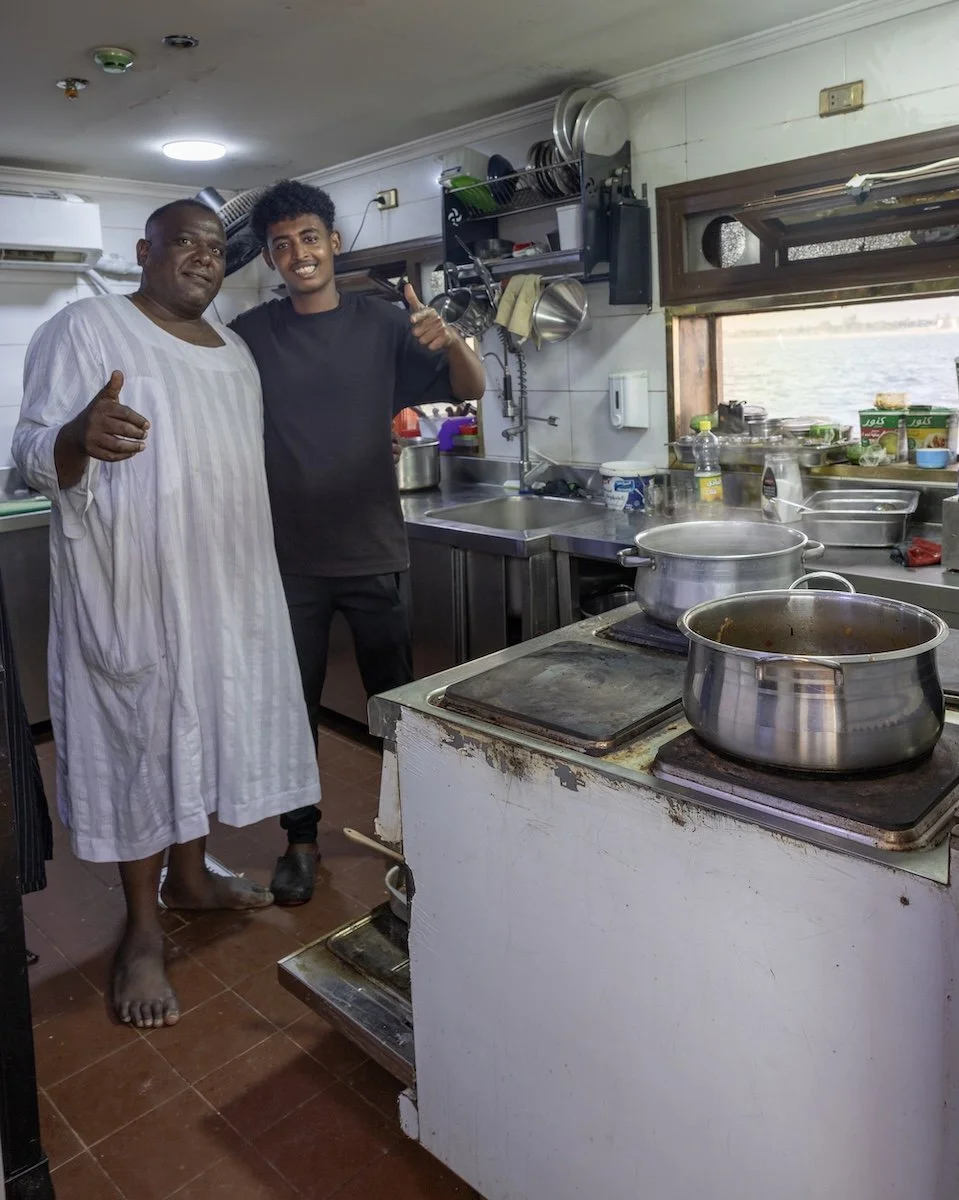
In the last week of May we were outnumbered by the 15 staff including boat manager John Basta, Captain Coco and his three crew (locally known as the “Rayes”), two tug-boat staff and a mechanic, the chef and his assistant, two waiters, two housekeepers and a cleaner. In addition to which we had two Egyptologists: Gamal Kayed for the seven Anglophones and Mohammed Galil for the four Francophones.
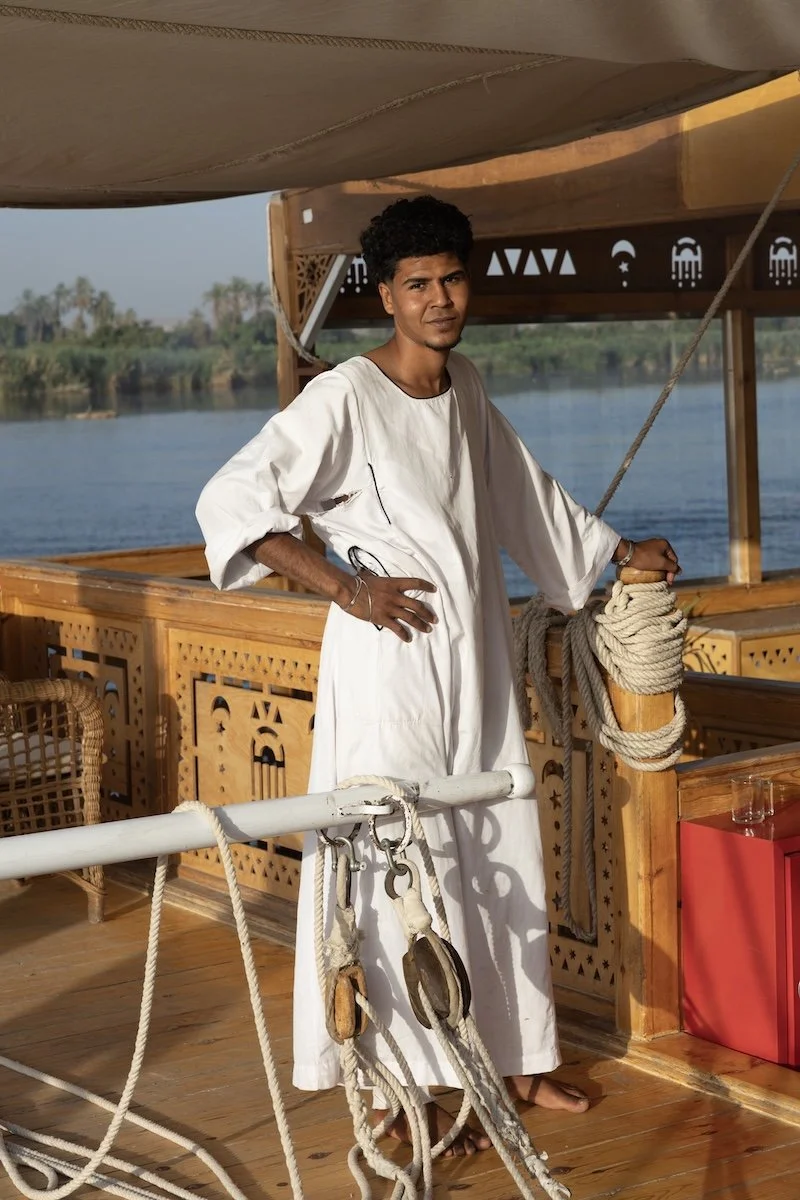
Captain Coco (centre, standing in grey) and some of the other crew members of The Nile
My premium cabin aboard The Nile
I’d been assigned one of the two panoramic suites but have to confess at being slightly disappointed that there was no balcony or outdoor seating area which I’d seen on some other dahabiyas. And, if I’m being honest, if I were to do this a third time I wouldn’t book a panoramic suite because I found the waves slapping against two of the four walls woke me up several times a night, despite the very comfortable bed, a problem I’d not had in the ordinary cabin with only one exterior wall I’d occupied on my first cruise. However, that could also be because the winds were much stronger this time rising to Beaufort 5 or 6 which whipped the river waters up into choppy waves whereas on the previous cruise the wind had never risen above Beaufort 1 or 2 barely creating a ripple on the water.
The sailors stowing the lateen sail on the move. You can see the tug to the left of the mast which pulls the dahabiyas along when there’s not enough wind to sail… which is most of the time!
The advantage of the wind was that we did actually sail on two afternoons (granted, not terribly fast) and watched, mesmerised, on the second day as two of the crew scurried up the mast to stow the lateen sail and secure the yard to the mast, an operation which took a while as something, somewhere at the top had got stuck. The lack of wind on the first cruise meant the only time the sails were raised were so we could take photos rather than to actually move us along!
Dining tables took up almost all the space on the deck
Dining arrangements were also different. This time instead of a long table down the centre of the main deck leaving plenty of space for comfy sofas, arm-chairs, floor cushions and even a jacuzzi, on this dahabiya each family or friend group had their own table and even their own napkin rings. So we could have made do with just four tables for the energetic and lively French grandmother travelling with her charming granddaughter; the young French couple; my two friends and myself; and a Polish/Algerian couple travelling with her mother and their young teen son. But the tables were out for a full quota of passengers and that meant that, apart from four deck-chairs at the fore of the boat and the sofas in the enclosed area on deck (which was air-conditioned but nobody really sat here except in the evening when two of us played backgammon... with the air-conditioning turned off), there is nowhere comfortable to sit and watch scenes unfold along the banks of the Nile which haven’t changed (well, except for the satellite dishes and mobile phones!) from those painted in the frescoes thousands of years earlier which we’d been admiring in the temples and tombs.
I think if we’d all sat at one long table it would also have cohered the group much faster (we did, but only on the last day of the cruise) and it would have cleared space for big, comfy cushions or sofas to sit on and watch the world slip past because you can only sit on a hard dining chair for so long! I heard mutterings about this from all the passengers so perhaps management might have a re-think about how the deck is organised?
One person also said they felt the bar area near the aft of the boat, occupied when the boat is underway by the crew because that’s where the tiller and the main mast are, was almost out of bounds for passengers. I have to confess I didn’t really notice this but then I’m not much of a bar person. But it’s true that I never saw anyone sitting on the stools at the bar.
Hatshepsut’s Temple
My concern that I’d be bored visiting the same temples I’d seen on the first cruise was unfounded. First because every Egyptologist has their own favourite places in each temple (Luxor, Karnak, Kom Ombo and Philae were the four I saw twice) so you get a different take, and second because we visited places on this second cruise that we had not been to on the first one. In Luxor, for example, we saw different tombs in the Valley of the Kings and instead of seeing Medinet Habu as I’d done the first time, we visited Hatshepsut's Temple, more impressive I found from a distance than it is close up because the frescoes have almost disappeared and some of the heavy restoration done in the past is now being questioned.
Sadly tough we did not stop in Esna, just south of Luxor, to see the remarkable little temple there with its extraordinary colours brought to life by very recent restoration work which I’d seen on the first cruise.
The Temple of Horus at Edfu
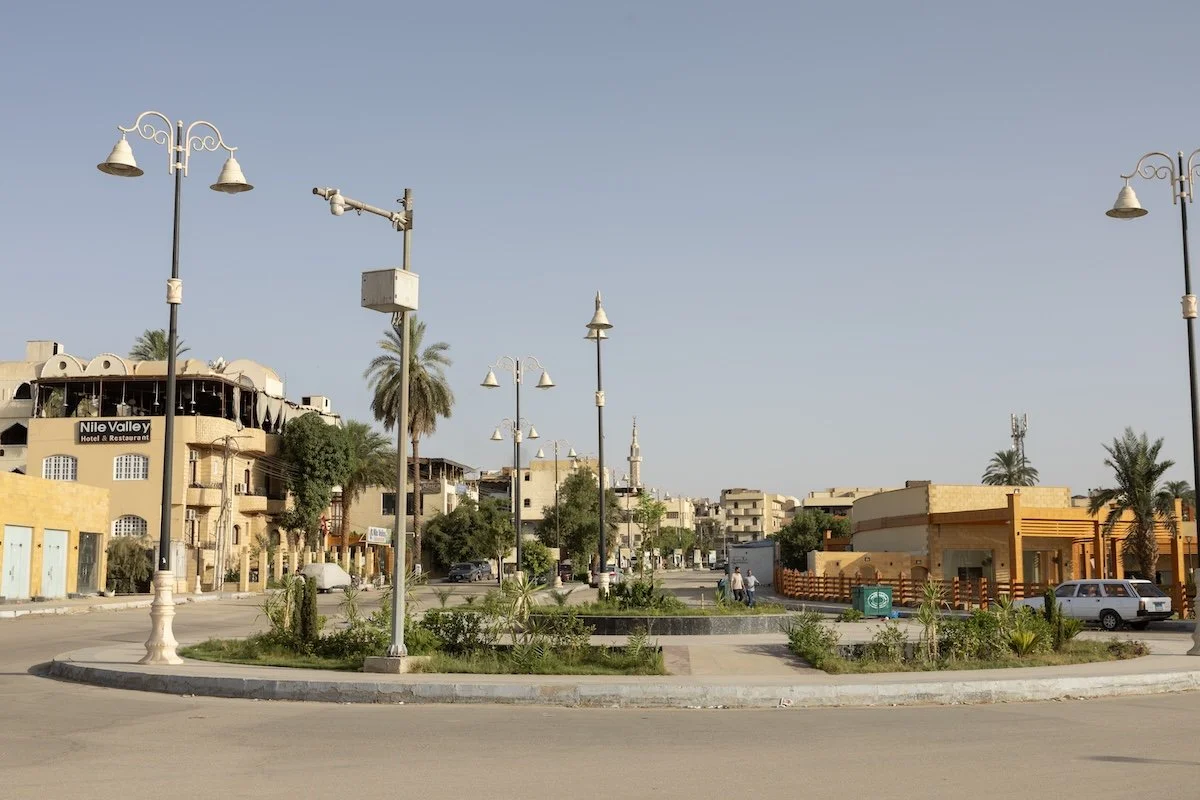
Instead we went to the much bigger temple (indeed, it’s the second biggest in Egypt after Karnak) at Edfu, a new one for me and well worth the visit. But to get there if you’ve stopped on a cruise you have to take a mini-bus or a horse-drawn carriage from the port through the town which is completely disfigured by the extraordinary quantities of mostly plastic garbage. Given the numbers of tourists there were there, even at the very end of the shoulder season, and the care the Egyptians usually pay to their ancient sites, I’m astonished that the local authorities haven’t taken some action to clean this up. I’ve now travelled a bit through Egypt and the town of Edfu takes the biscuit, hands down, for filth.
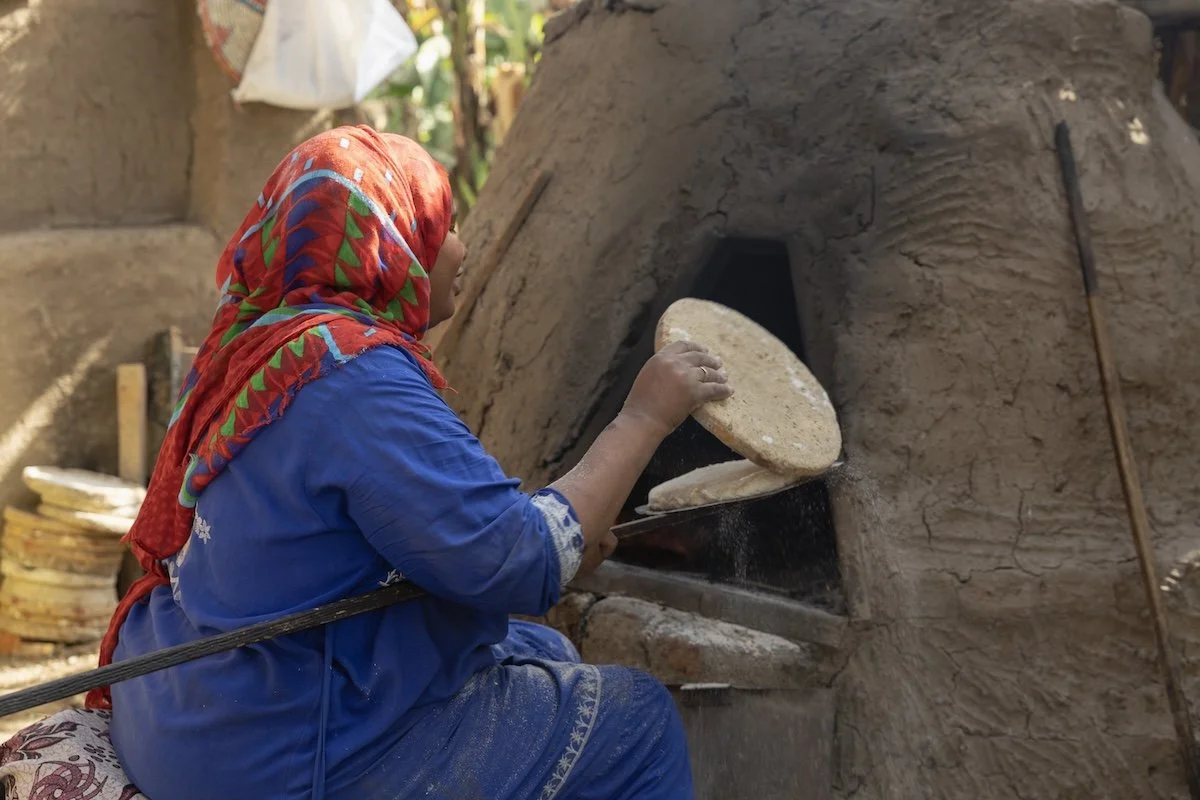
Asma, the baker in Ramady
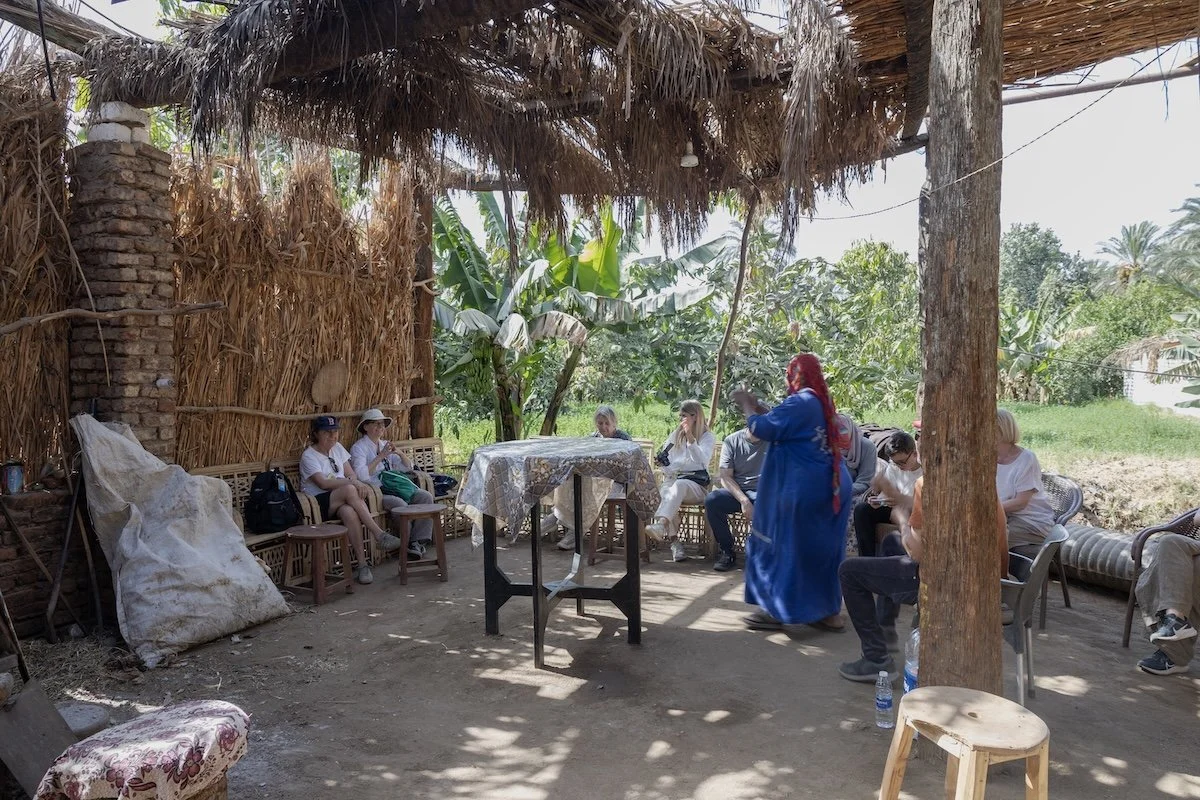
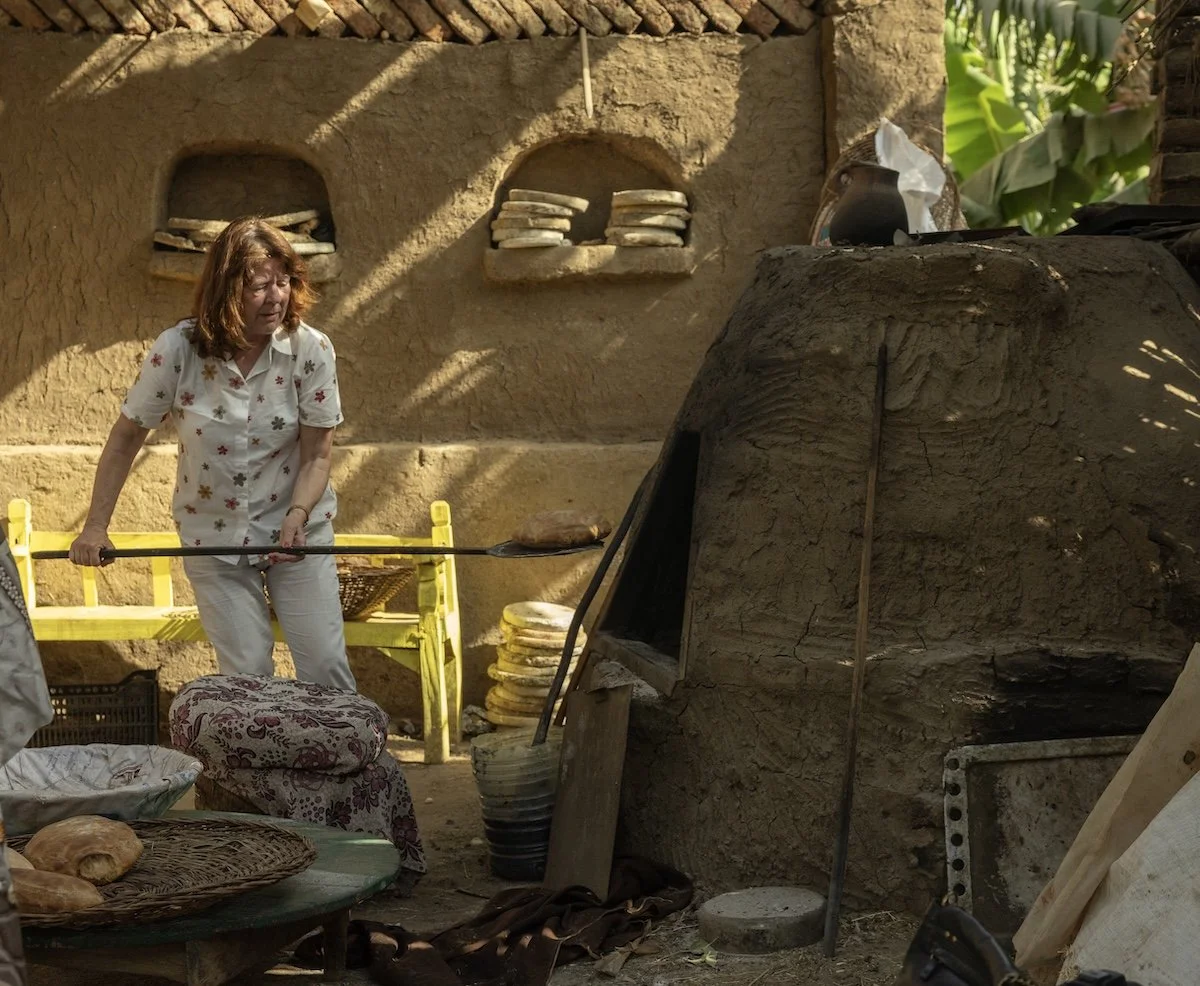
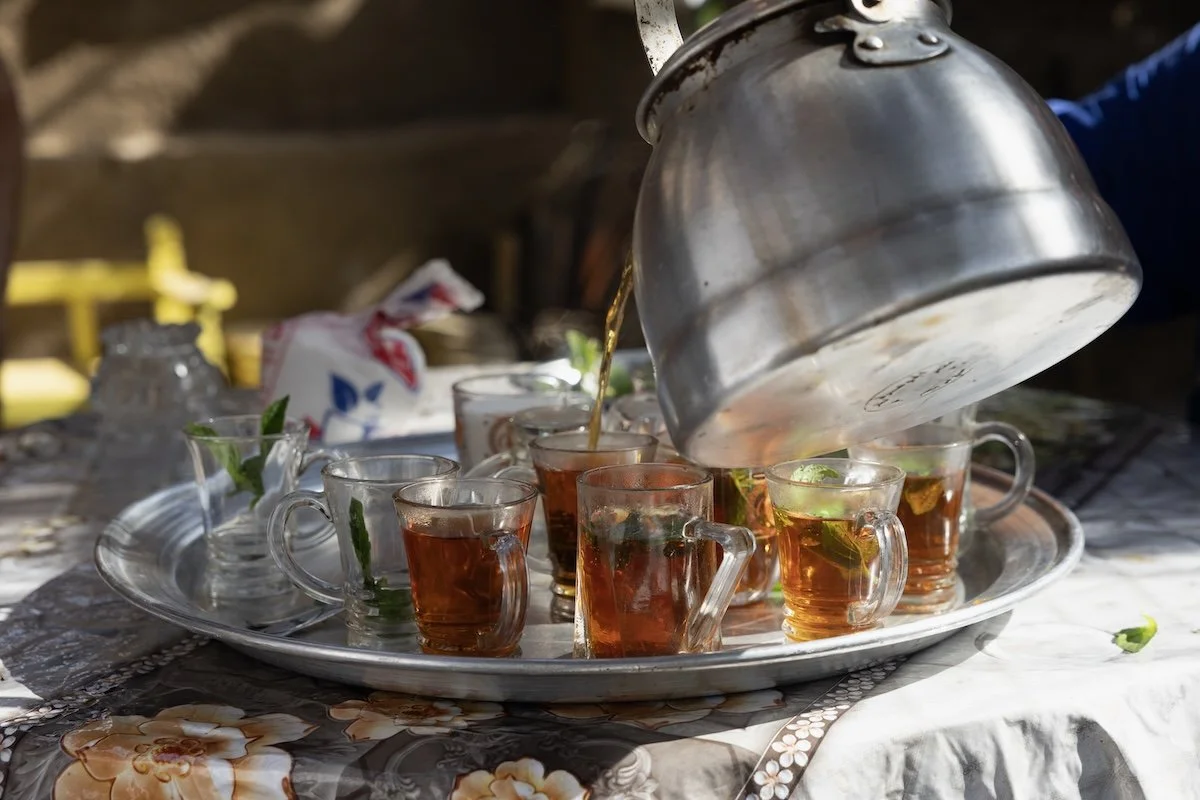
But then came the highlight of the cruise, for me in any case. We paused for the rest of the afternoon in the village of Ramady where Asma, an exuberantly cheerful baker, introduced us to the art of making eish baladi, the traditional Egyptian flatbread, which she placed in her clay-oven, the tannur, with a wooden peel to cook for no more than about seven or eight minutes. Our contribution was to mark the uncooked eish baladi to decorate it! She seemed unfazed sitting in front of the hot oven although the ambient temperature was already pushing 45°C. She served us mint tea and we were then able to eat the piping hot and delicious bread.
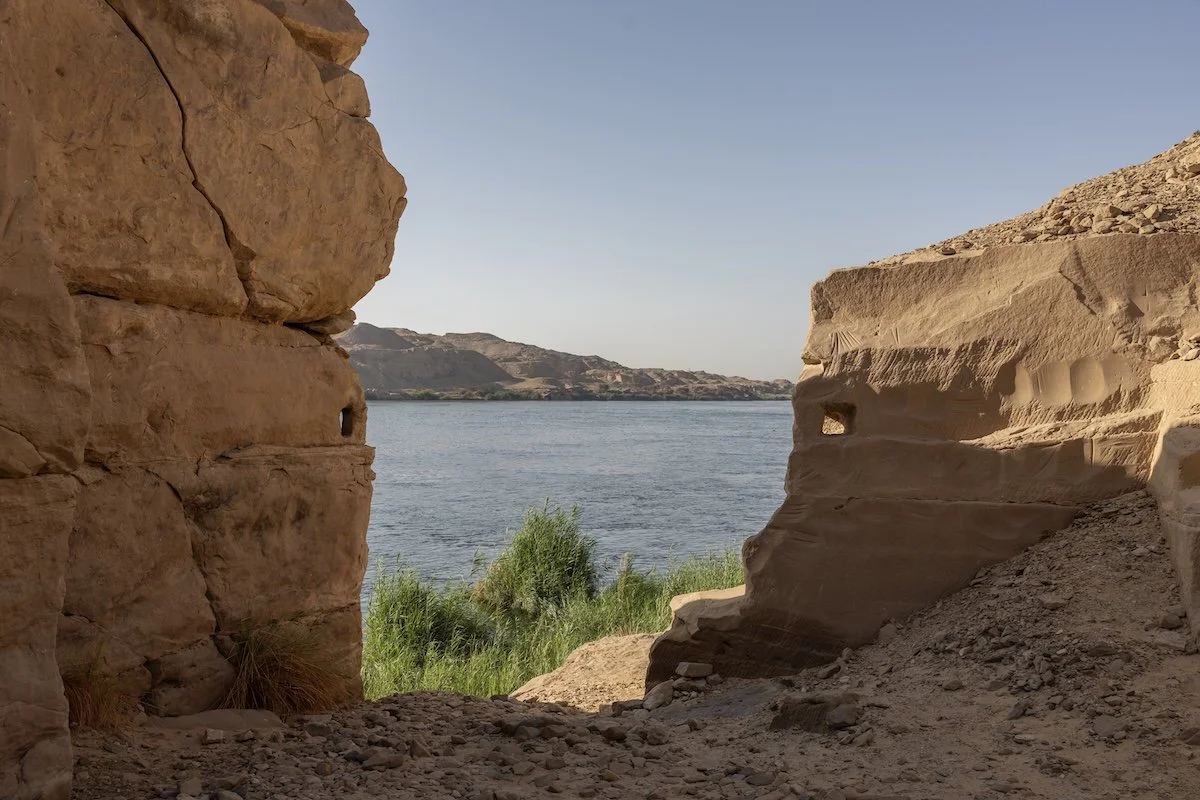
Remarkably straight cuts in the rocks at the Gebel el-Silsila quarry
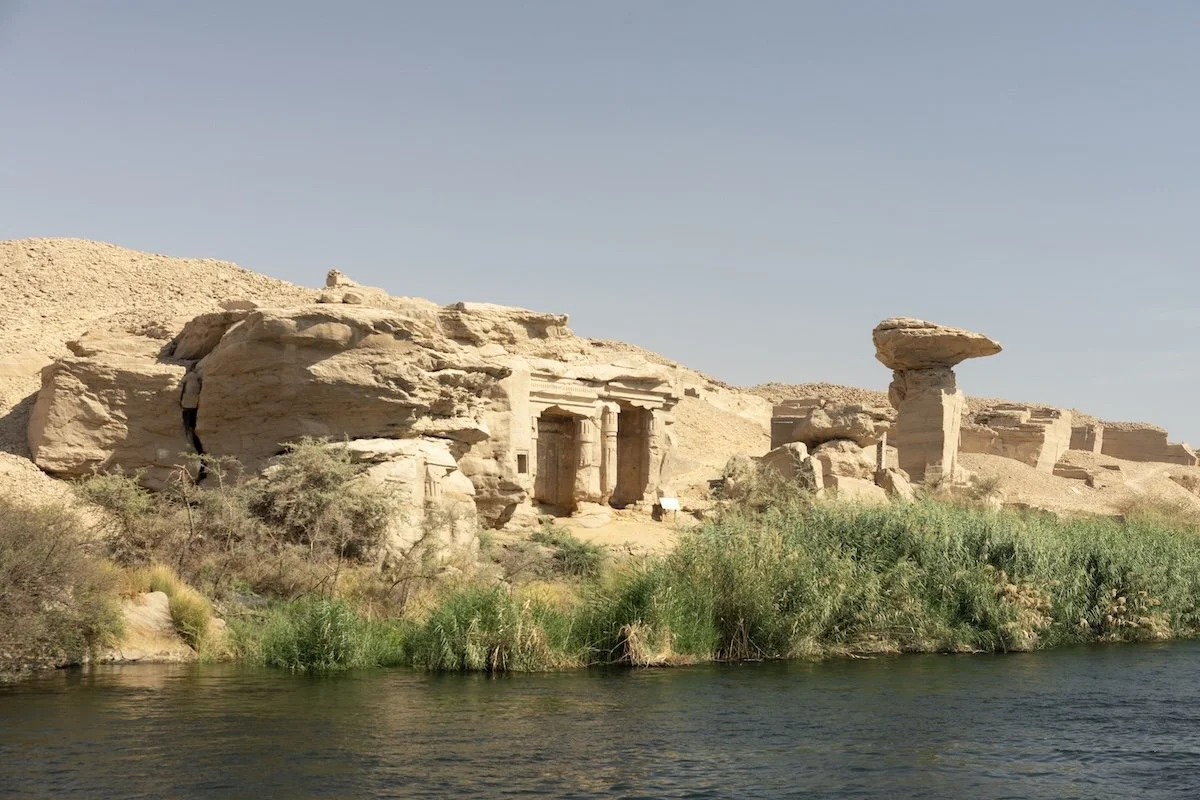
That night we stopped at the foot of the rarely visited Gebel el-Silsila sandstone quarry at the narrowest point of the Nile which I found fascinating. It’s from here that the Ancient Egyptians cut the stones which were then floated down the Nile to build their temples. Early the next morning we went exploring, discovering the masons’ marks, foot holds, rope holes and postholes where scaffolding would have been attached to allow them to work 4m high. The workers left inscriptions and small shrines, notably the Speos of Horemheb, a tiny temple hewn into the rock.
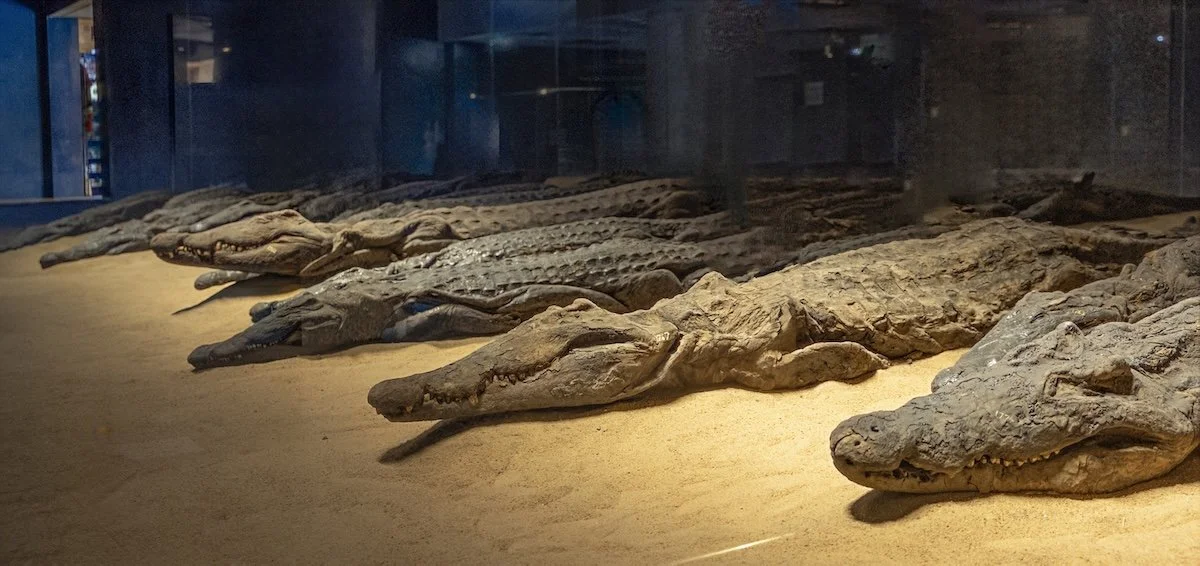
Kom Ombo temple and the extraordinary crocodile museum just next door were next. Now I don’t know how crowded Kom Ombo gets at the height of the tourist season because the twice I’ve been was when it was searingly hot at the end of May/early June. But both times I felt as though I had the entire place to myself and I’ve now seen it lit up at night (first time) and in the full glare of the midday sun (second time). And you notice different things. I’d been distracted, for example, by a noisy wedding party and the glamorous bride the first time so hadn’t noticed the Nilometer which intrigued me the second time.
Kom Ombo temple
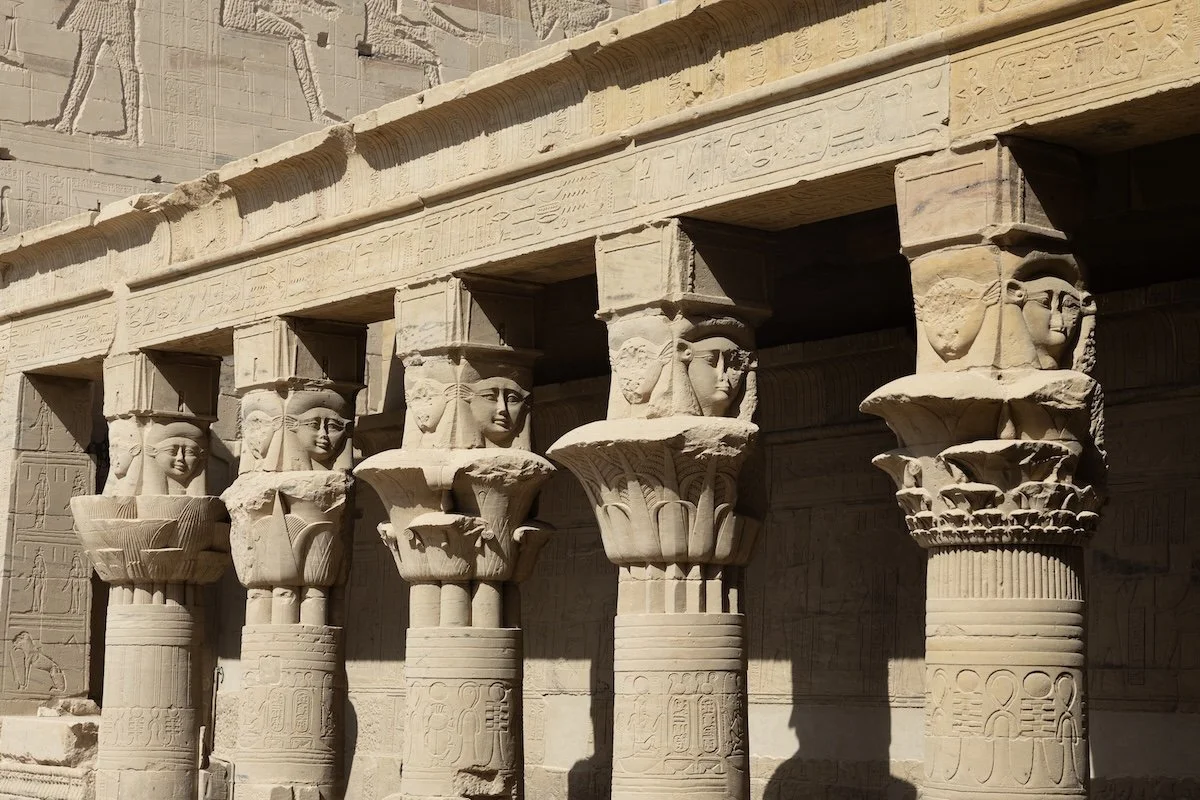
Philae temple
We moored just outside Aswan for the night and the next morning took one of the little boats that take visitors to Agilkia Island which is where the temple of Philae was relocated from its original island just a few hundred metres away in the 1960’s to rescue it from disappearing under the waters of Lake Nasser formed when the Aswan High Dam was built. Now, I know I had visited this temple on my first cruise but possibly because it was about 50° C the day we went I had no recollection of it at all! So this was a very pleasant discovery in much more comfortable temperatures even though it was the same time of year as the first time I'd been.
Just as I had regretted not spending any time in Luxor on the first cruise I had similarly been frustrated at only spending a few hours in Aswan. So, this time my friends and I decided to spend two days in the city. We thought we’d said goodbye to our new cruise friends but we actually bumped into them several times over the following days because they too had opted to spend time in Egypt’s southernmost town. But more on that in another post.