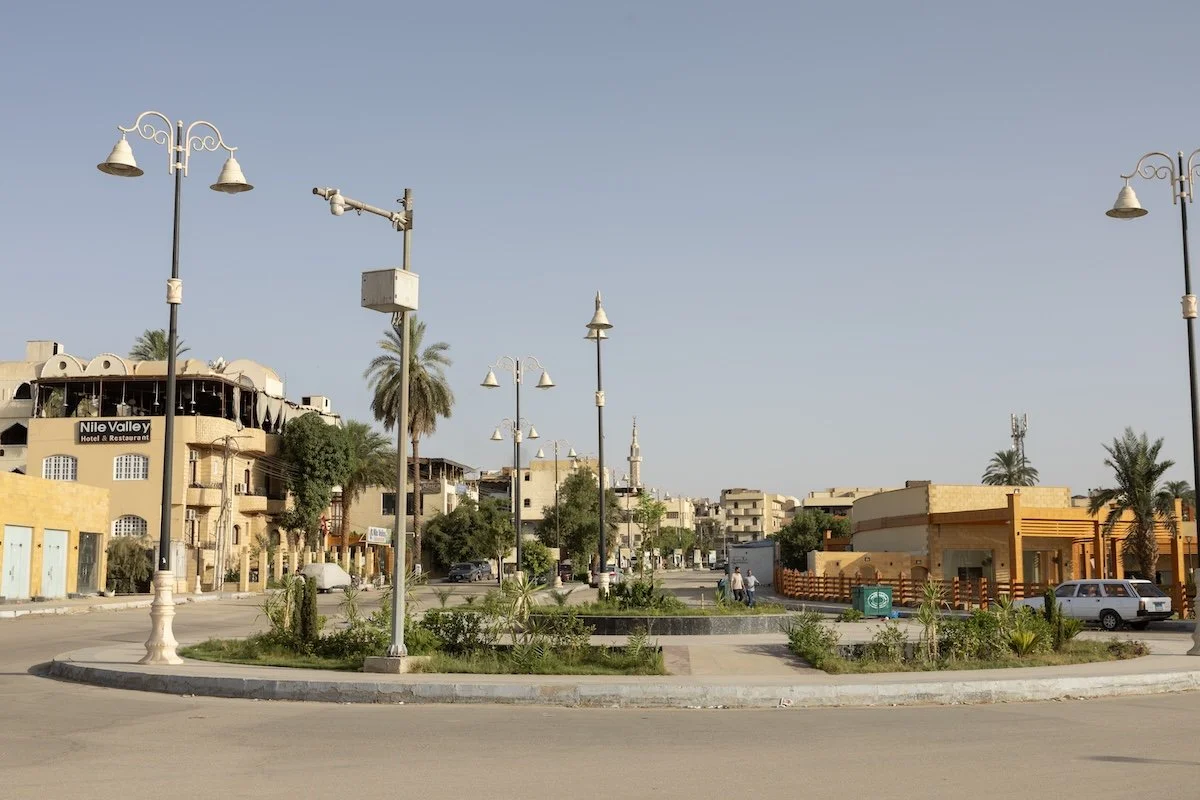
Discovering Luxor
In late August 2025 I was invited by The Nile Dahabiya to join one of their cruises from Luxor to Aswan. I hesitated because surely one cruise on a traditional sailing boat down the Nile is very much like another?
But, unlike the earlier Nile cruise (which you can read about here), organised specifically for a group of journalists and influencers, this invitation was simply to join paying passengers on a cruise. So I thought it would be interesting to see what a “normal” cruise was like.
I’d learned from the first trip, and reading up about others, that there are museums and sites visitors never see on these cruises so you need to organise to visit them yourself. This includes the Luxor museum, Howard Carter’s house on the west bank, the more expensive tombs in the Valley of the Kings, the Mummification museum and, at the other end of the cruise, the museums in Aswan and the temples at Abu Simbel.
I’d worked out I needed two full days in Luxor prior to joining the cruise late on a Saturday morning to see these things. However, in late May, which is when I, and the two friends who joined the same cruise as paying guests, were travelling to avoid the crowds, it is the end of the shoulder season and most direct flights to Luxor from Europe are on Saturdays only, which, of course, is the day most cruises start. So we had to fly to Cairo mid-week and then catch an Egypt Air flight to Luxor arriving at 1:30 am. Fortunately the chauffeur my friends had booked was there because the taxi my hotel had purportedly sent was nowhere to be seen.
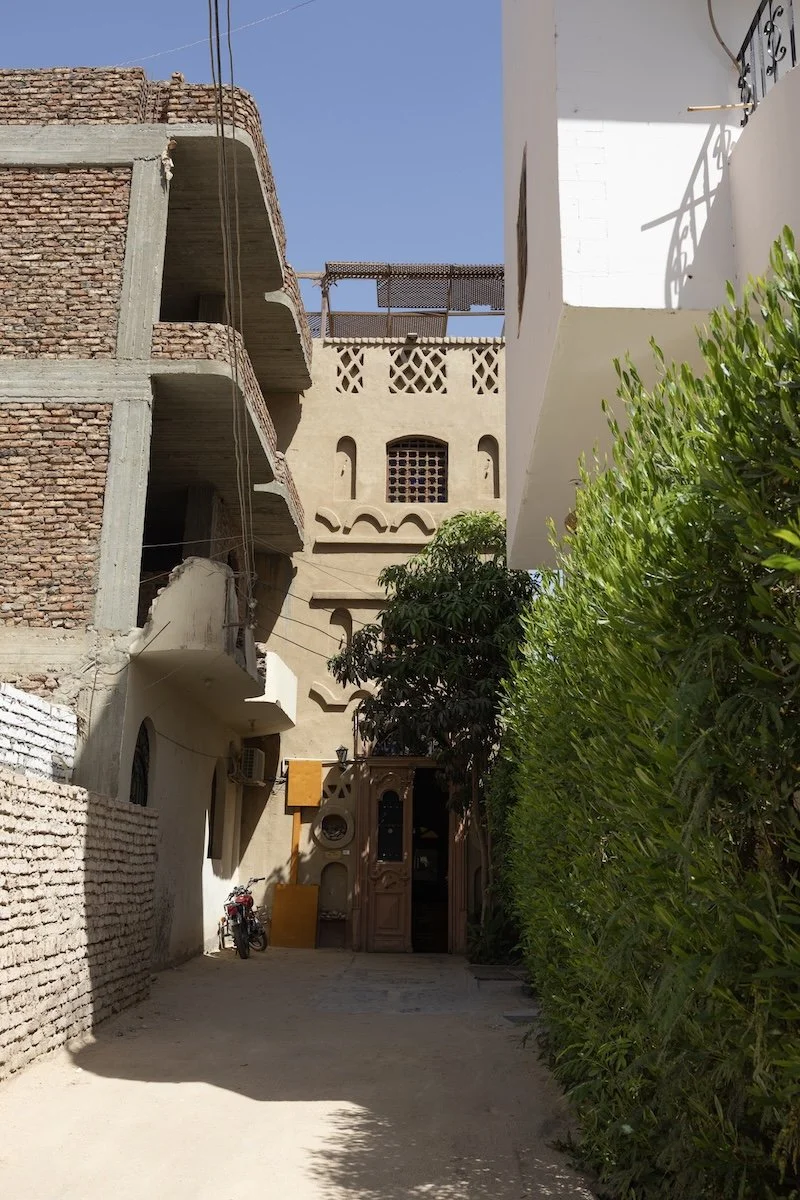
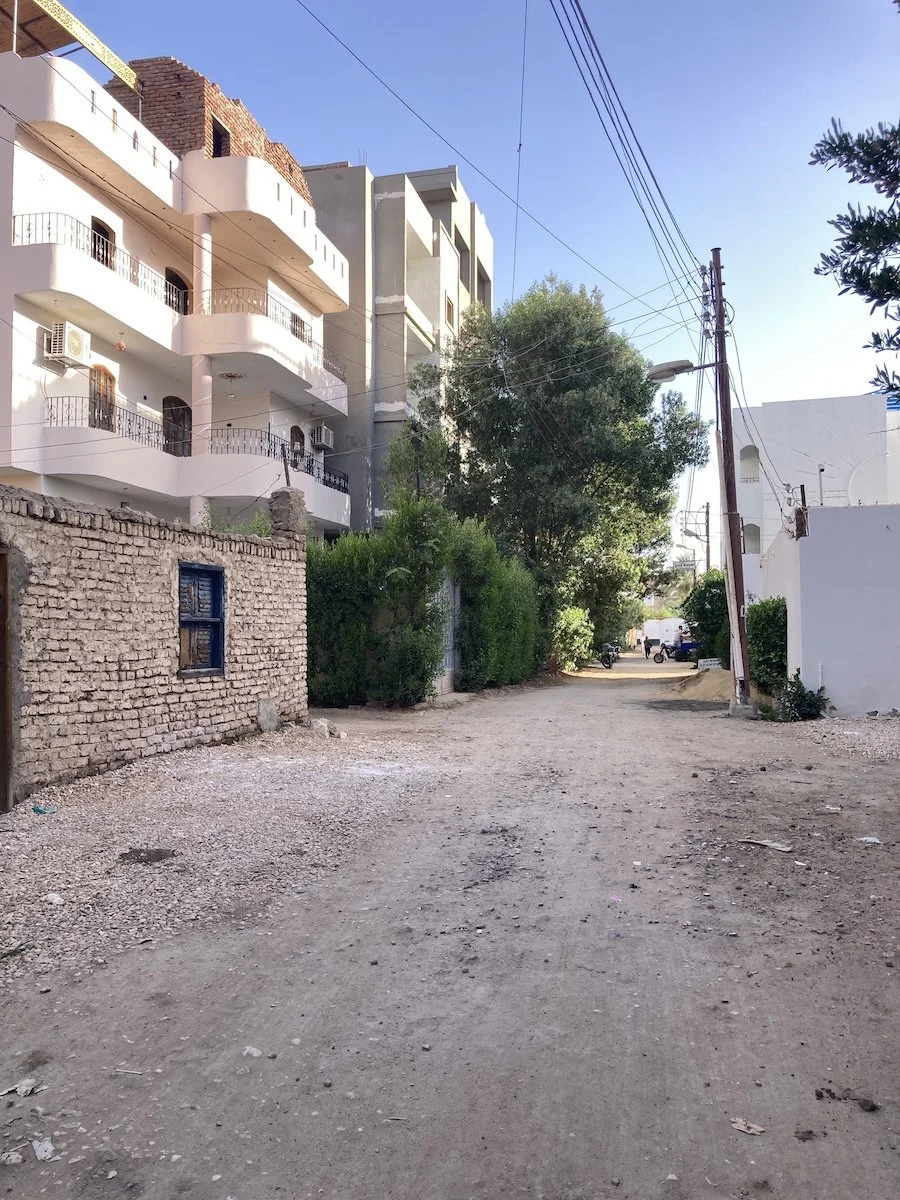
The main entrance to the Villa Nile Guest House at the end of a dusty alley. The name is barely visible on an A4 sized plaque to the left of the door!
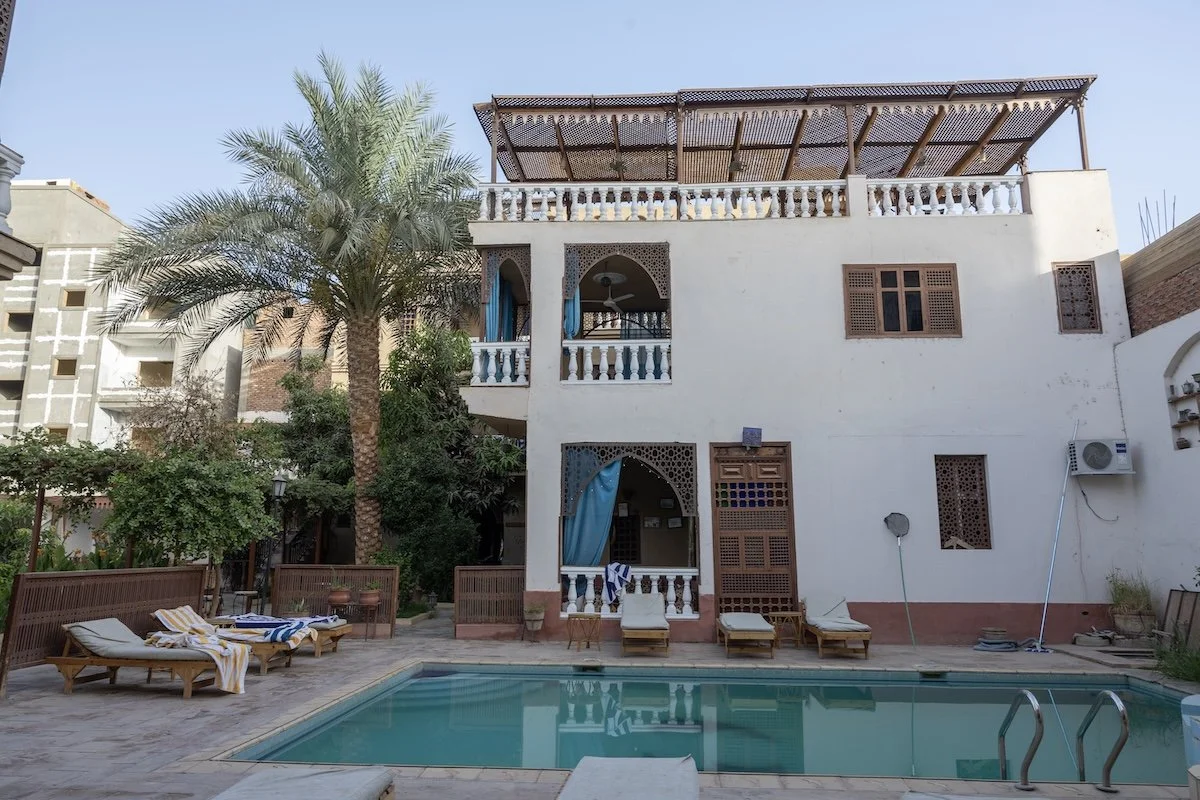
I’m averse to the soulless international hotel chains my friends had opted to stay in so had booked into the Villa Nile House guest-house on the west bank of the Nile. What the rave reviews in Tripadvisor omitted to mention is that it is incredibly hard to find: unfamiliar to chauffeurs and taxi-drivers, the guest-house lies at the end of an unlit alley off a dirt road which runs parallel to the similarly unpaved corniche road. At 3 am I began to wonder what on earth I’d let myself in for! But the chauffeur finally found it after asking a passing driver. If you choose to stay here just tell your driver to go to the Le Gourmet restaurant which is almost opposite the guest-house. Fortunately the night porter had left the door ajar, clearly expecting me, and showed me past the swimming pool, up a flight of stairs and into my large, domed room with a balcony and view onto the pool. The photos on the website are pretty accurate except that in my room there was no sign at all of a mosquito net. And the pool water had turned in the 50°C heat the preceding week so I wasn’t able to swim in it.
I only had three hours sleep because at 7:00 Mamdouh Kamel, the French-speaking Egyptologist whom I’d met on the previous cruise, came to pick me up to show us some of the tombs in the Valley of the Kings which I knew we would not be seeing with the cruise guide. These generally take you to three of the tombs included with the standard ticket which, at the time of writing (Oct. 2026) cost E£750 (€12.76) for an adult foreigner and E£375 (€6.38) for a student foreigner (for Egyptian nationals the prices are, respectively, E£60 and E£30).
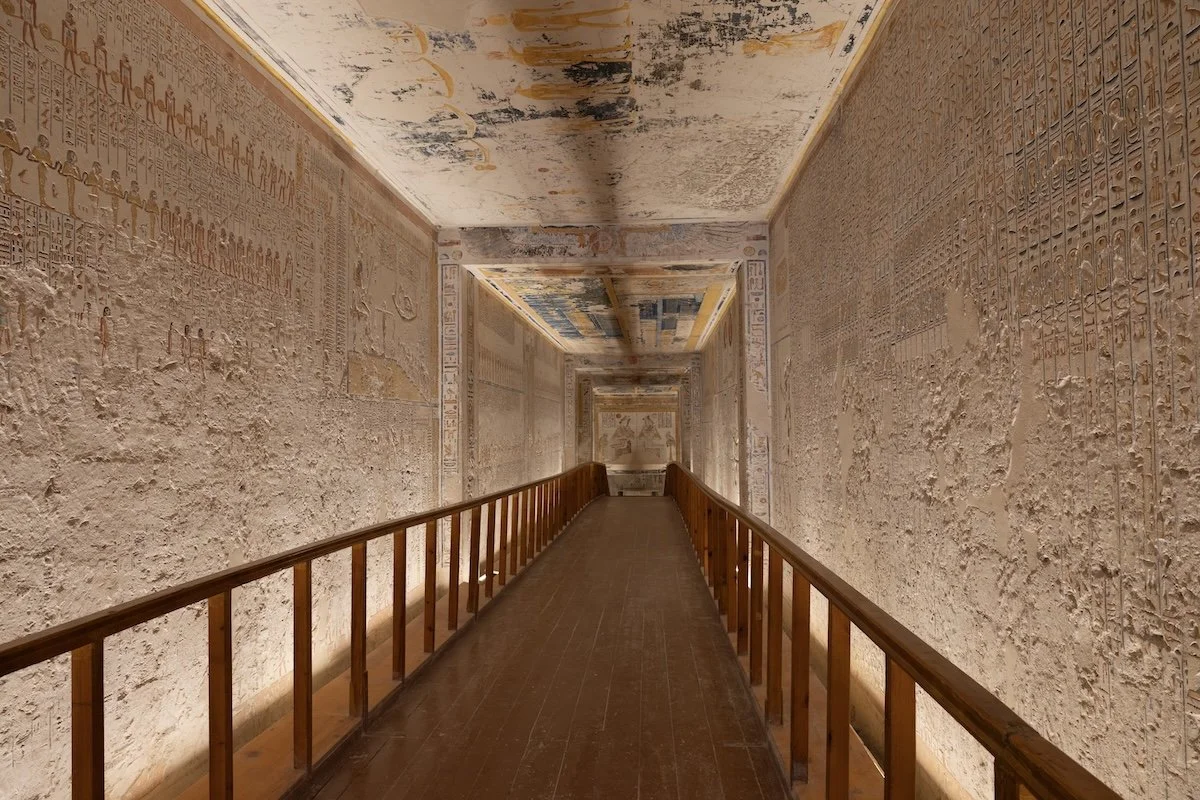
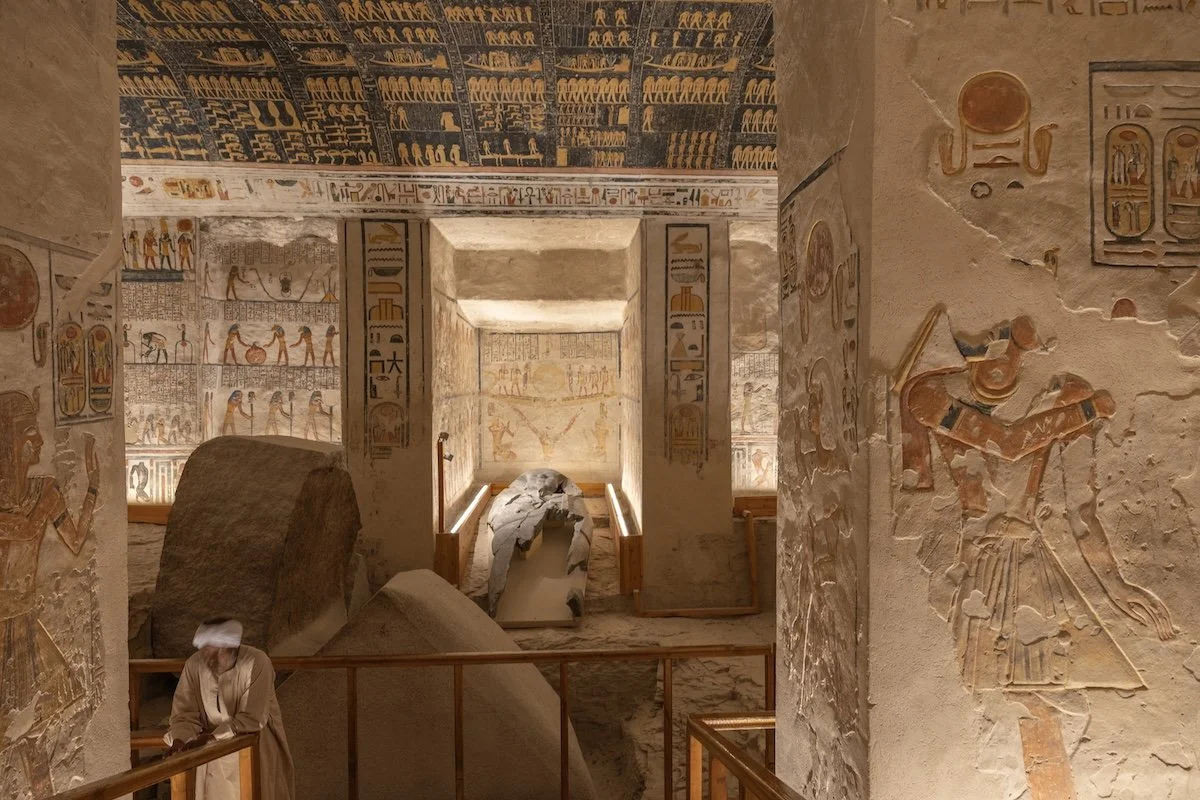
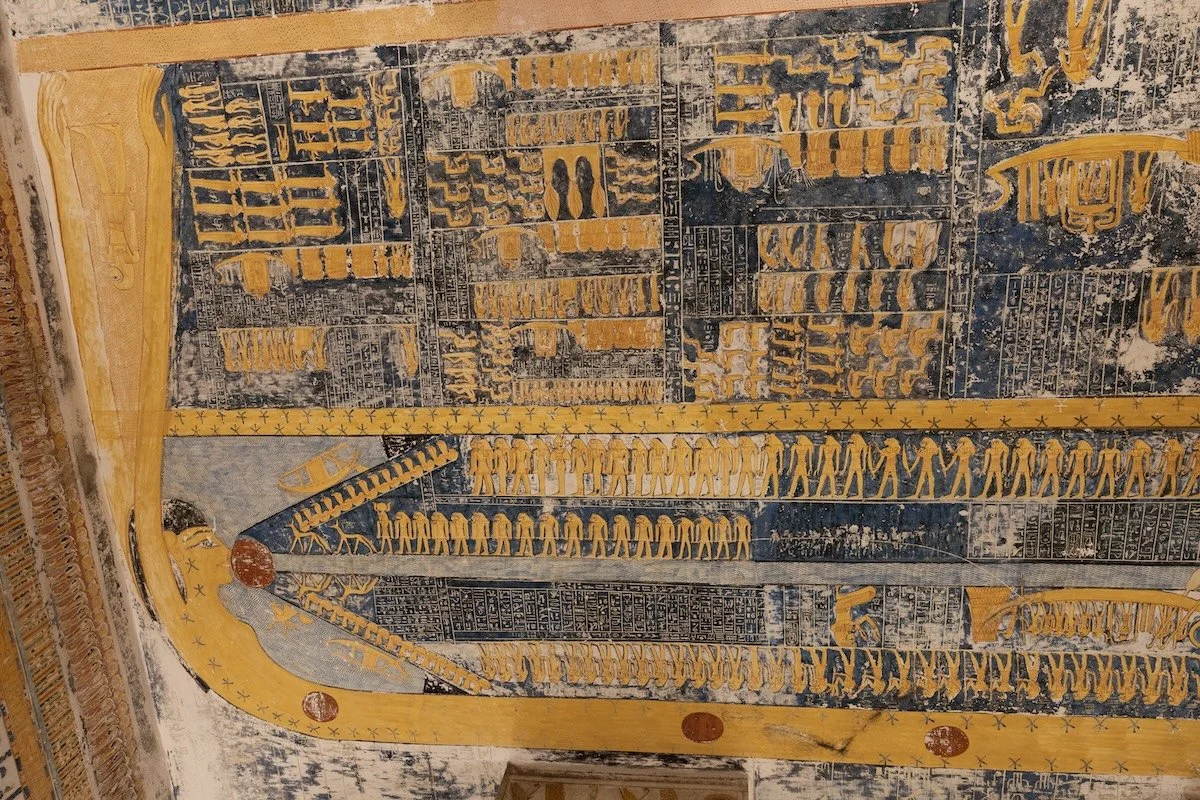
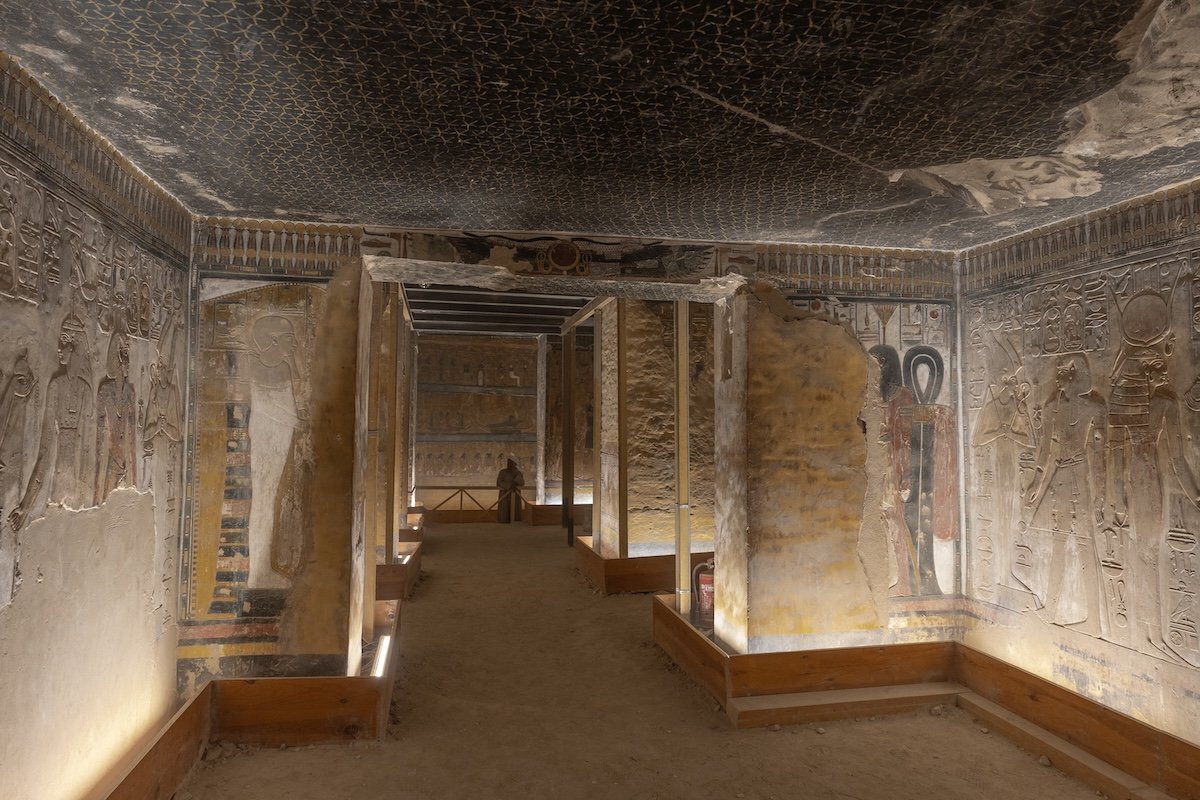
The tomb of Ramses VI. The advantage of visiting in late May is that there are few people. The disadvantage is that it’s very hot !!
I had specifically asked Mamdouh to take us to the tombs of Ramses V & VI (KV9*) and Seti (or Sethi, or Sety) (KV 17) which are not included in the standard ticket. Visitors have to pay an extra E£220 (€3.73 or half that for students) for the tomb of Ramses V& VI and E£2,000 (€33.95 and no student discount) for the tomb of Seti. Given the time of year and the extra cost we had these tombs almost to ourselves.
I particularly liked the unfinished parts of Seti’s tomb where you can clearly see the first sketch in red and the corrections in black. They look as though they were drawn yesterday!
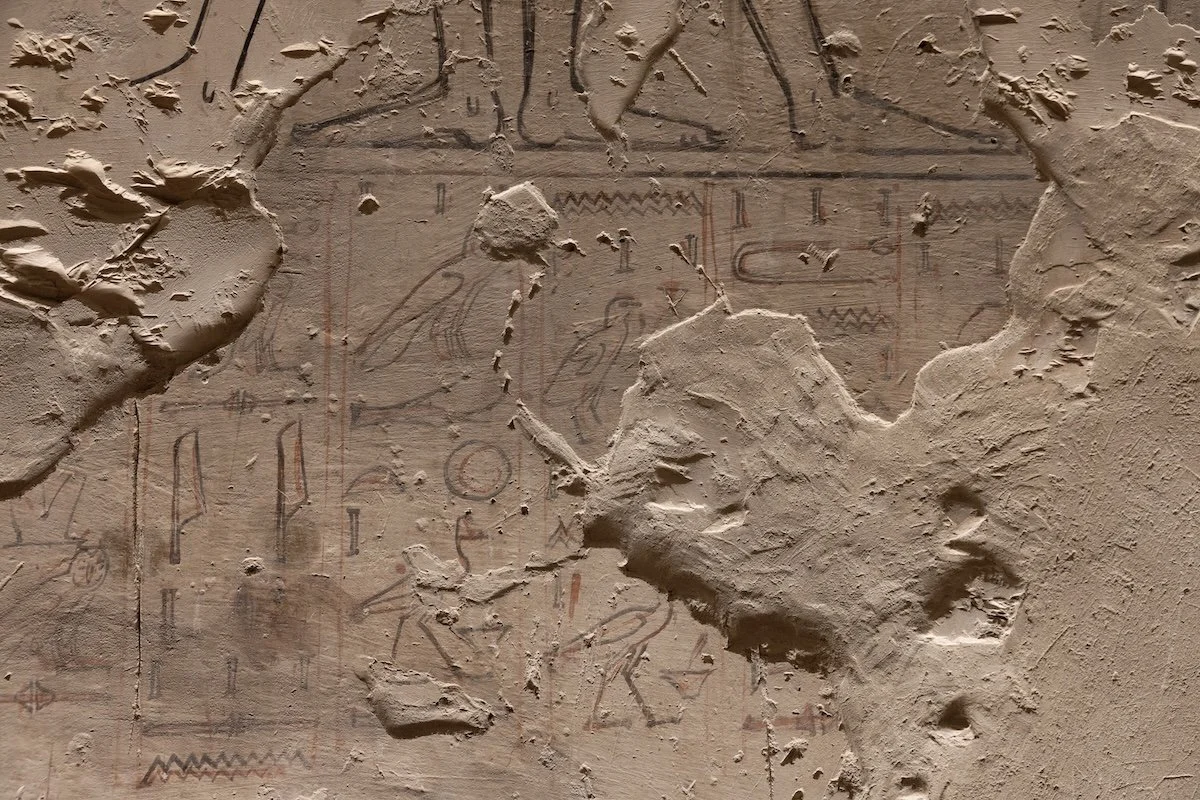
Preparatory drawings in the unfinished parts of the tomb of Seti I (KV17) who died before his tomb was completely ready.
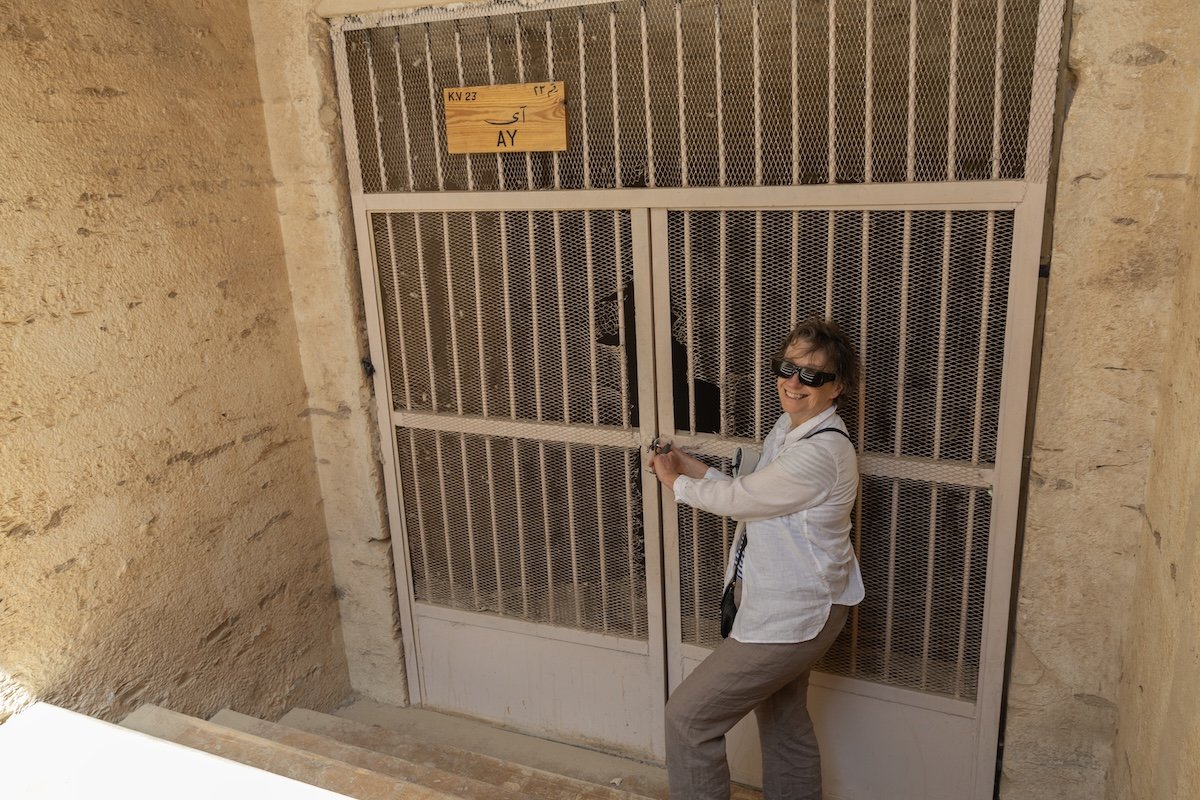
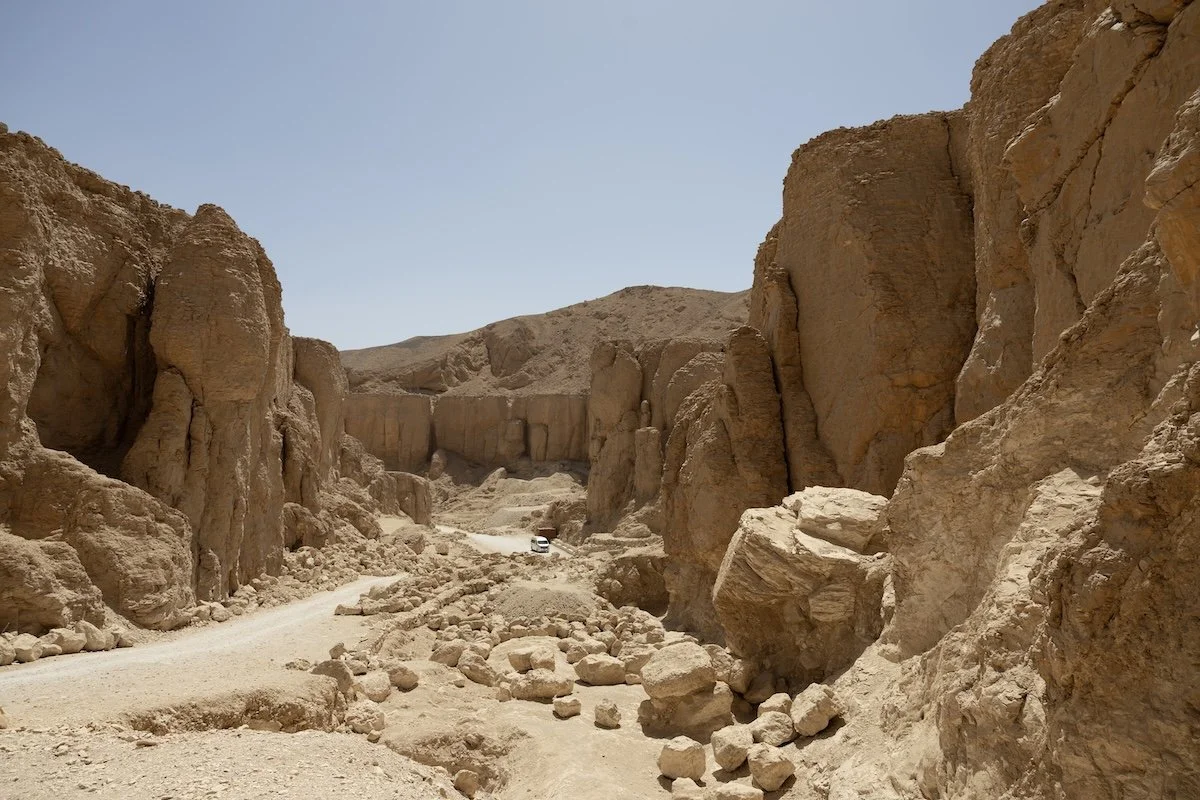
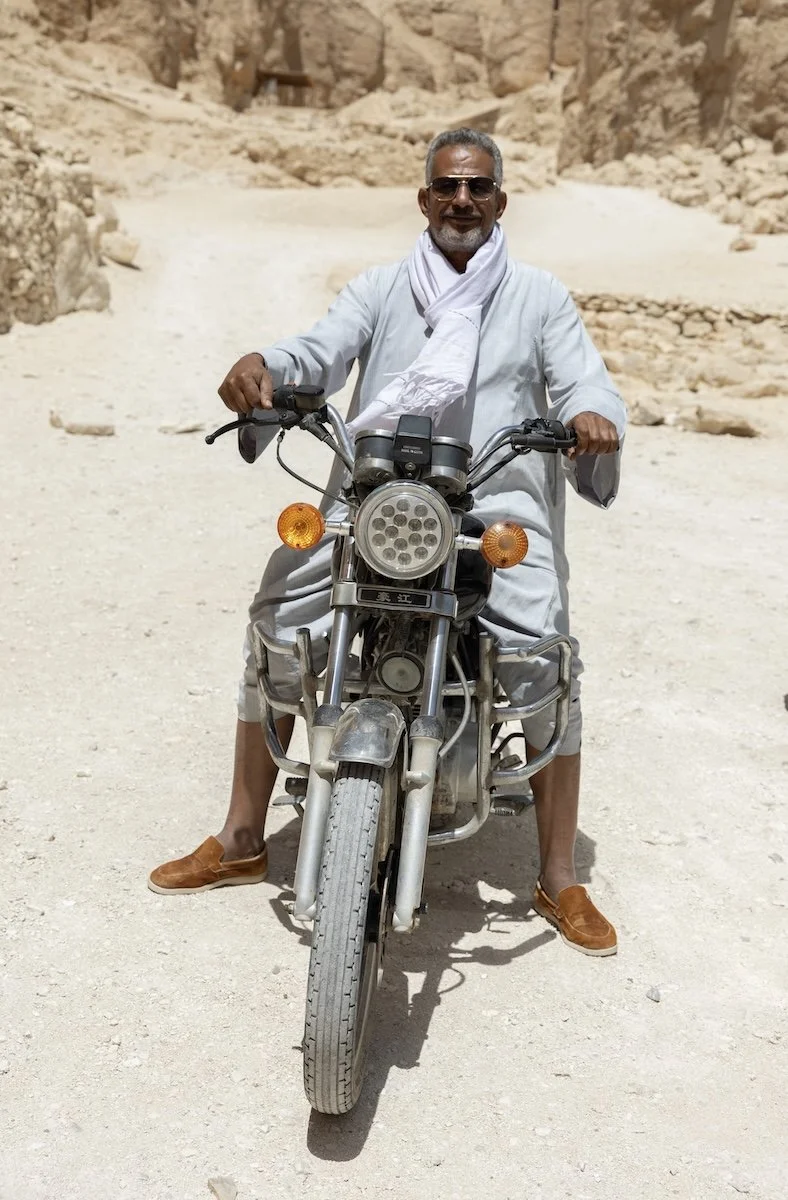
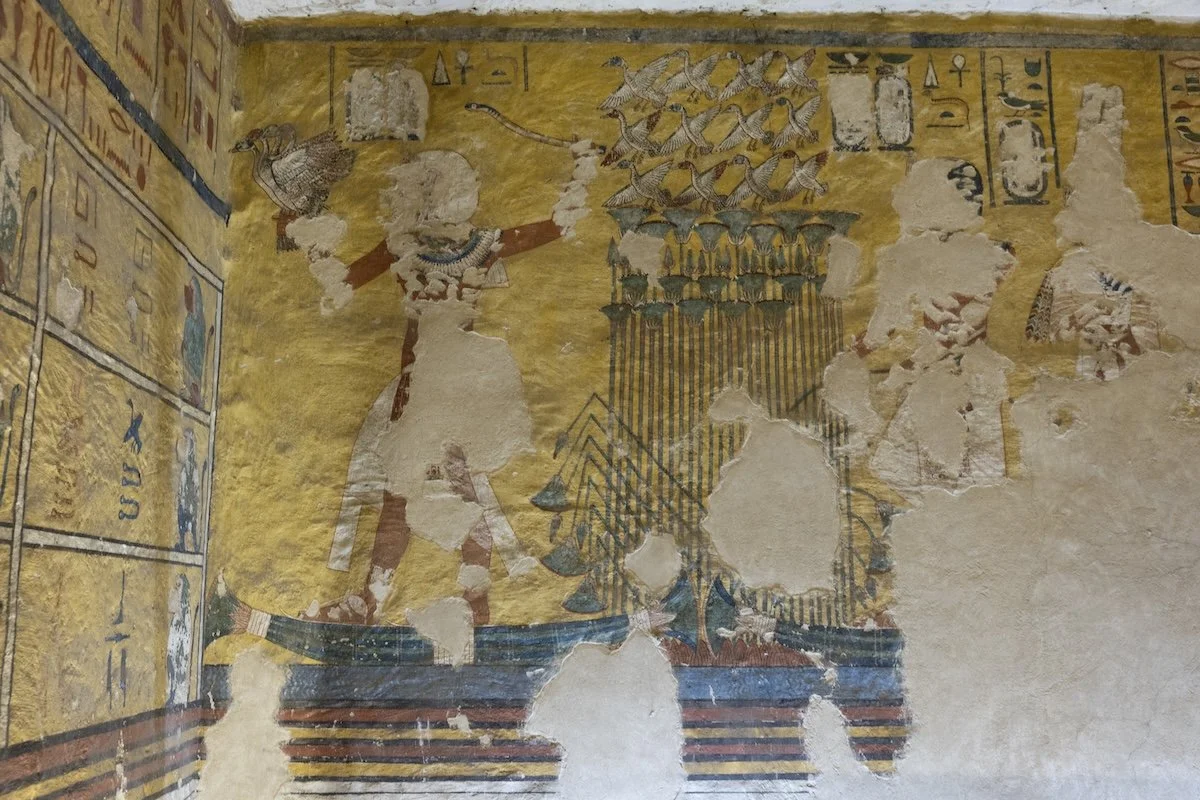
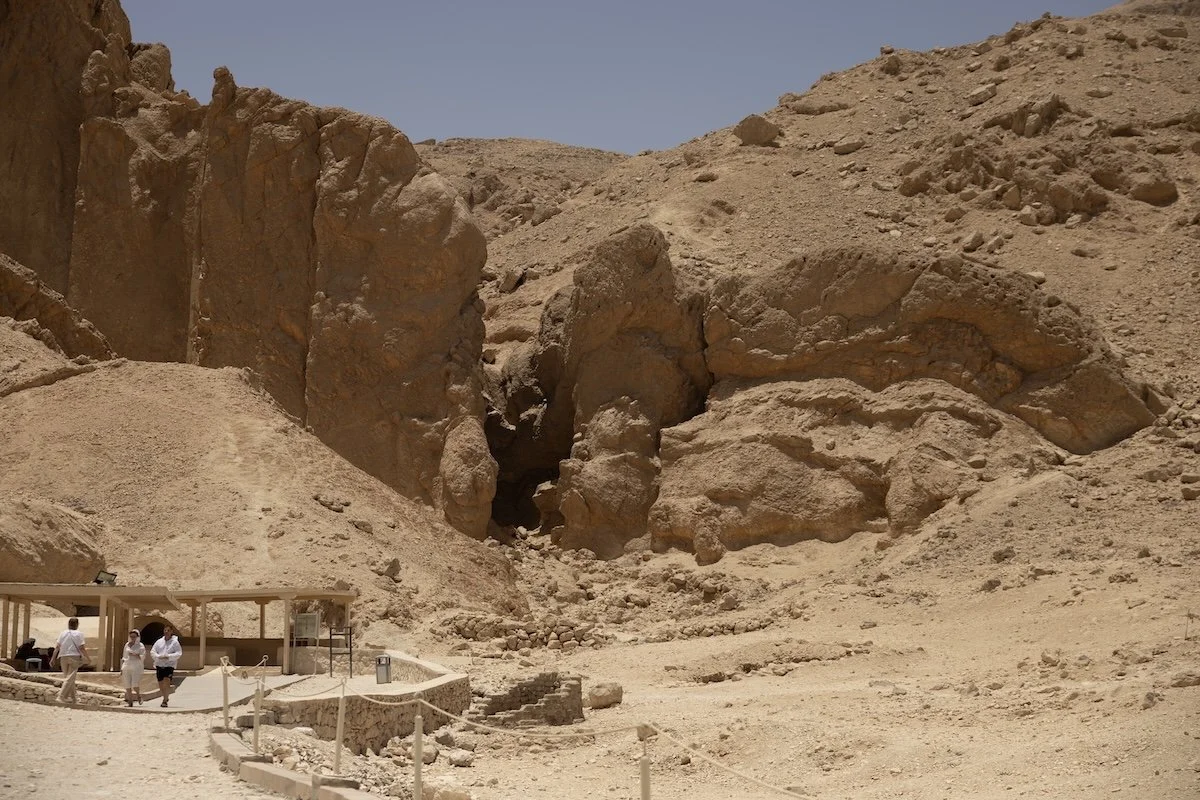
We then hopped into a mini-bus and wound our way a kilometre through deep, arid canyons to visit the tomb of Ay (KV23), Tutankhamun’s grandfather, one of only two of the finished tombs in this western part of the Valley of the Kings (the three others are unfinished). A smartly-dressed guard followed us part of the way on his Chinese motorbike and handed us the keys so we could open the tomb ourselves given that we were the only people there. Inside the tomb is a badly damaged but nevertheless stunning, unique in a royal tomb, scene of a duck hunt through the papyrus marshes.
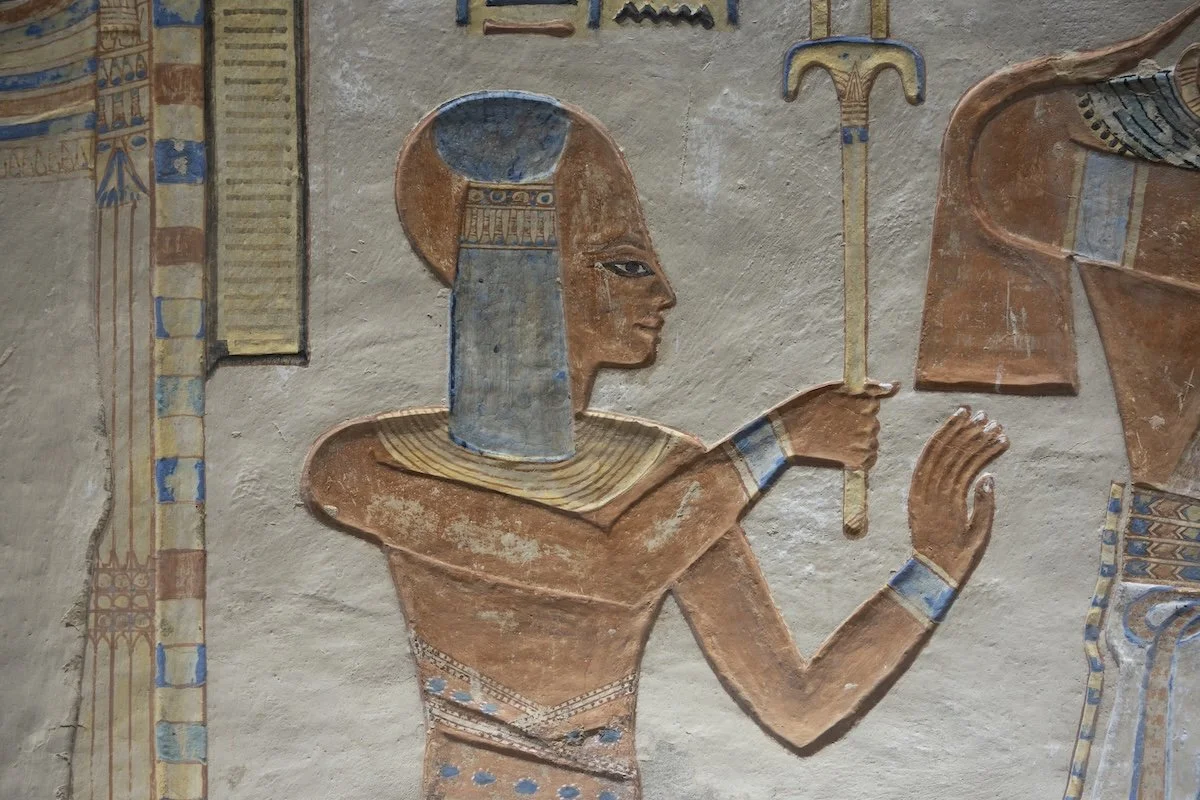
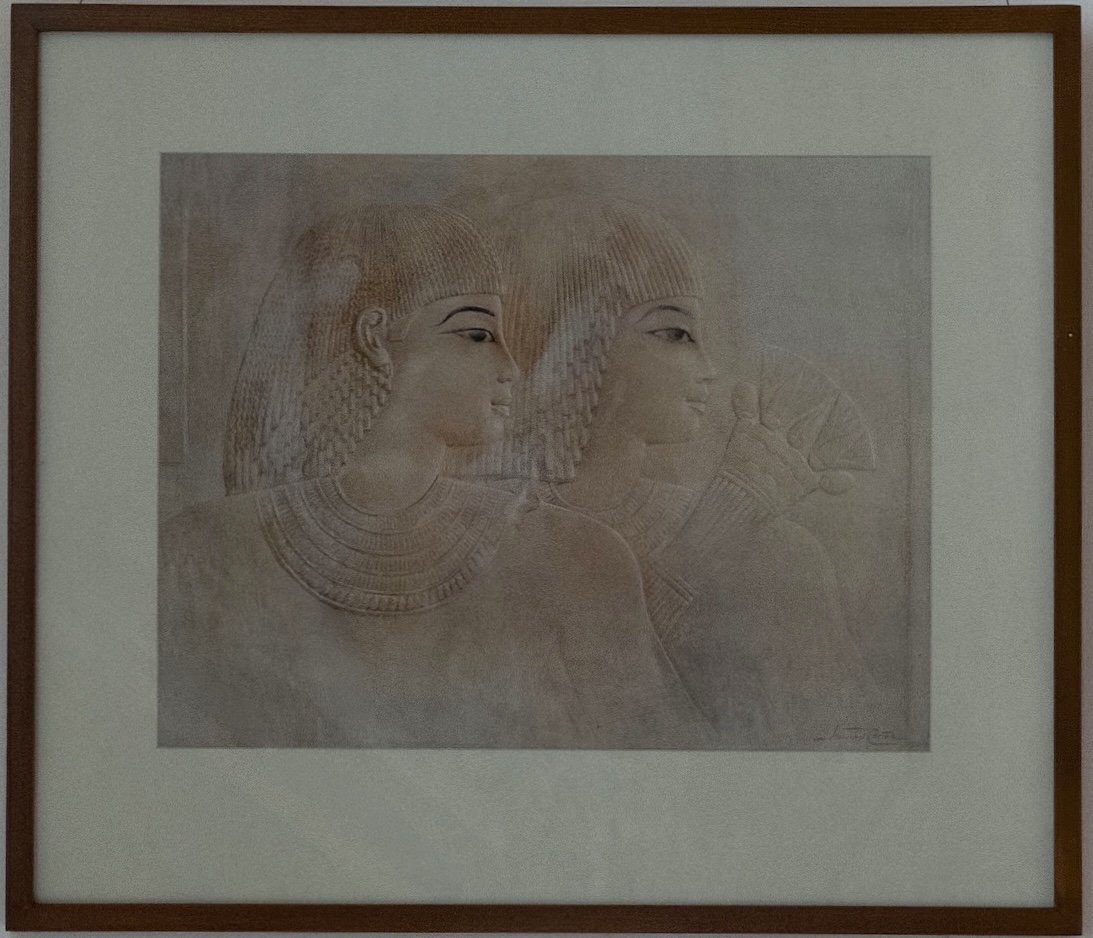
The young prince Amen-hir-Khopshef depicted in his tomb
Mamdouh also took us to the Valley of the Queens, where I learnt that not only queens but royal children are buried. We saw the tombs of Amen-hir-Khopshef (QV55) and Kha M Waset (QV44), sons of Ramses III, and Queen Titi (QV52). But I found that because most of the frescoes in these tombs are protected by glass they were less immediate than those in the Valley of the Kings (which are generally not behind glass) and hard to photograph. Sadly the tomb of Queen Nefertari (QV66), which I’ve read is the most spectacular of the tombs in the Valley of the Queens and ranks right up there with Seti’s tomb, has been closed since 2nd March 2024 and will remain so for the foreseeable future.
Because we’d started so early, we still had time for a swim in my friends’ hotel before dinner at the roof-top restaurant above the Aboudi book-store in downtown Luxor. Don’t be put off by the exterior which makes it look like a fast-food place. It is not and the restaurant affords what must be one of the best views in town of Luxor temple lit up for the night just across the Mabad al-Karnak avenue.
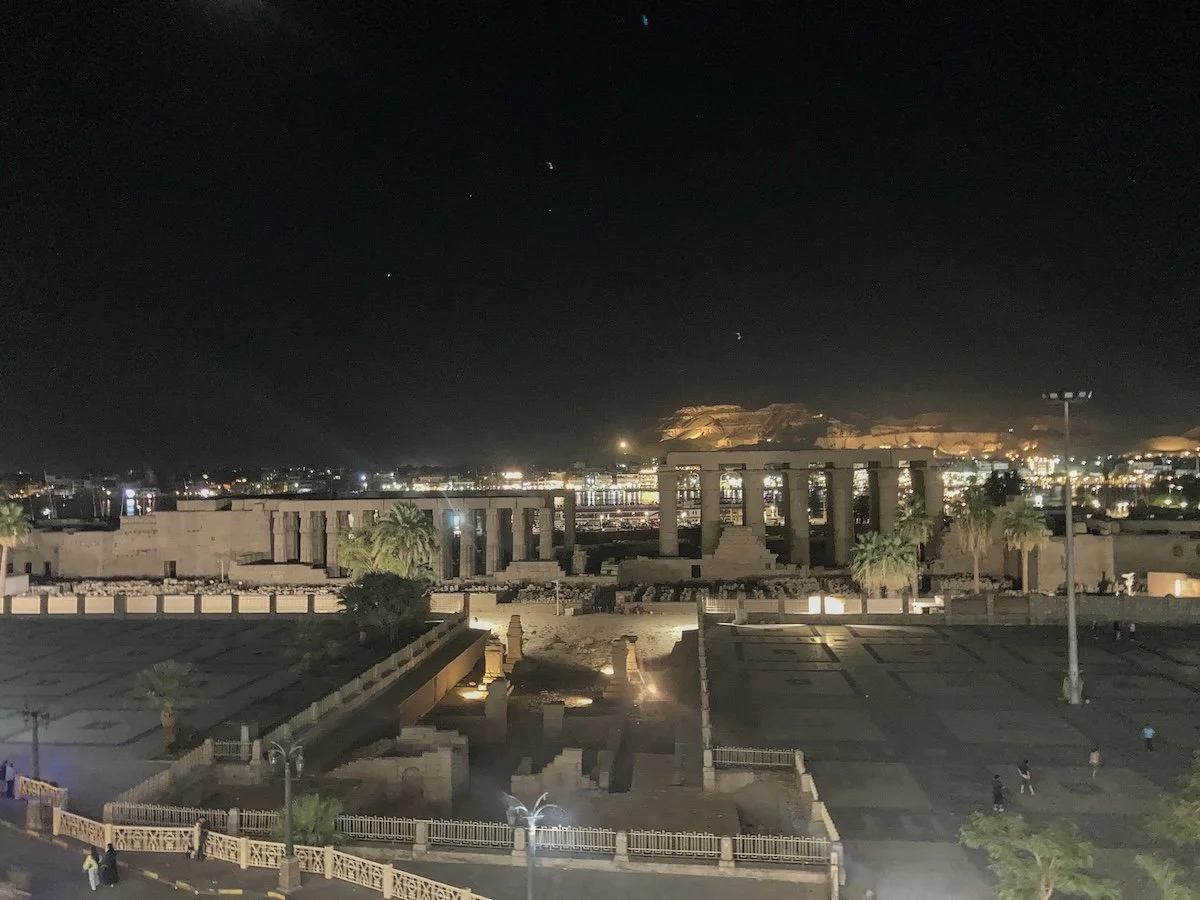
View from the roof-top restaurant above the Aboudi book-store.
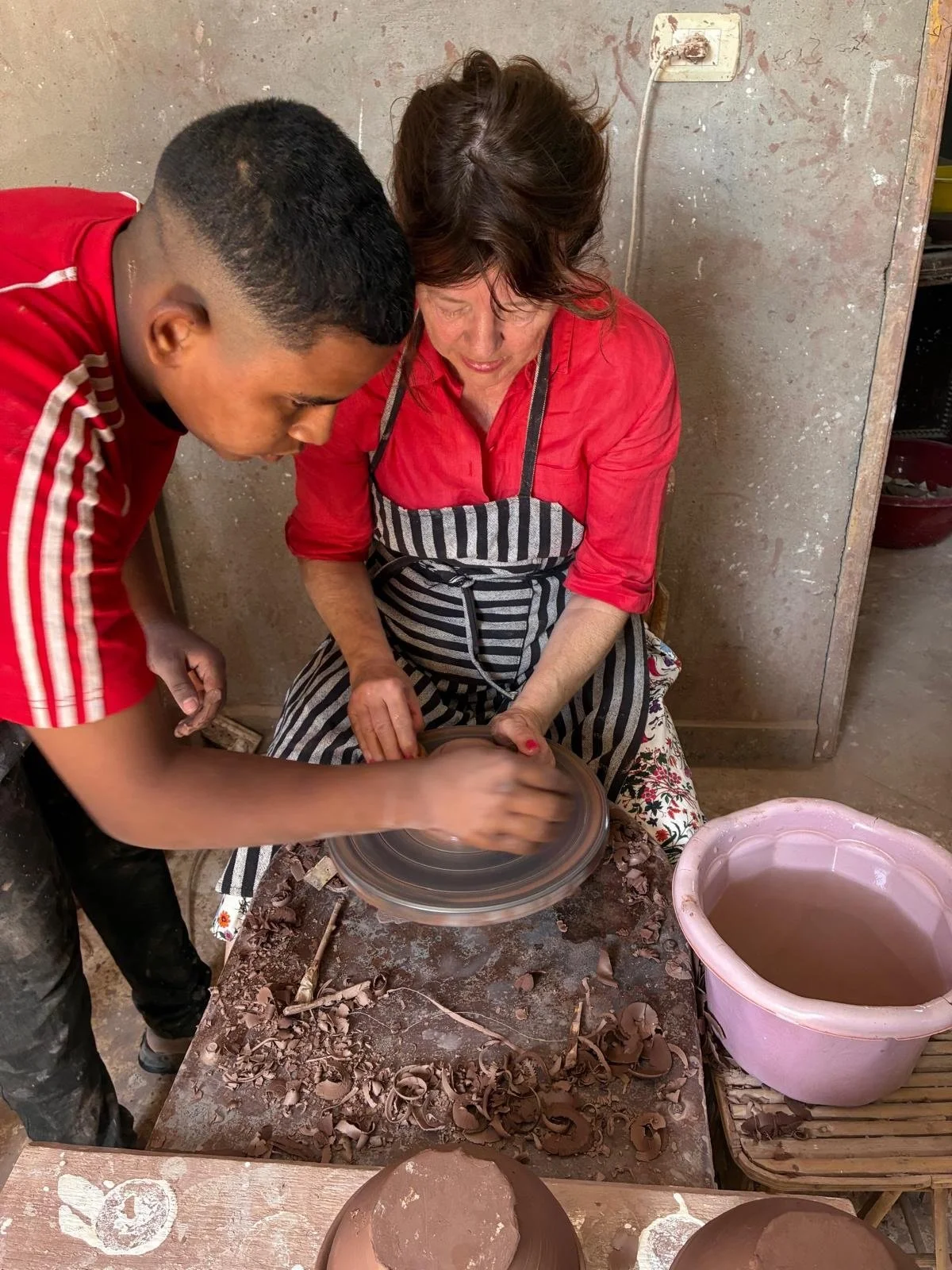
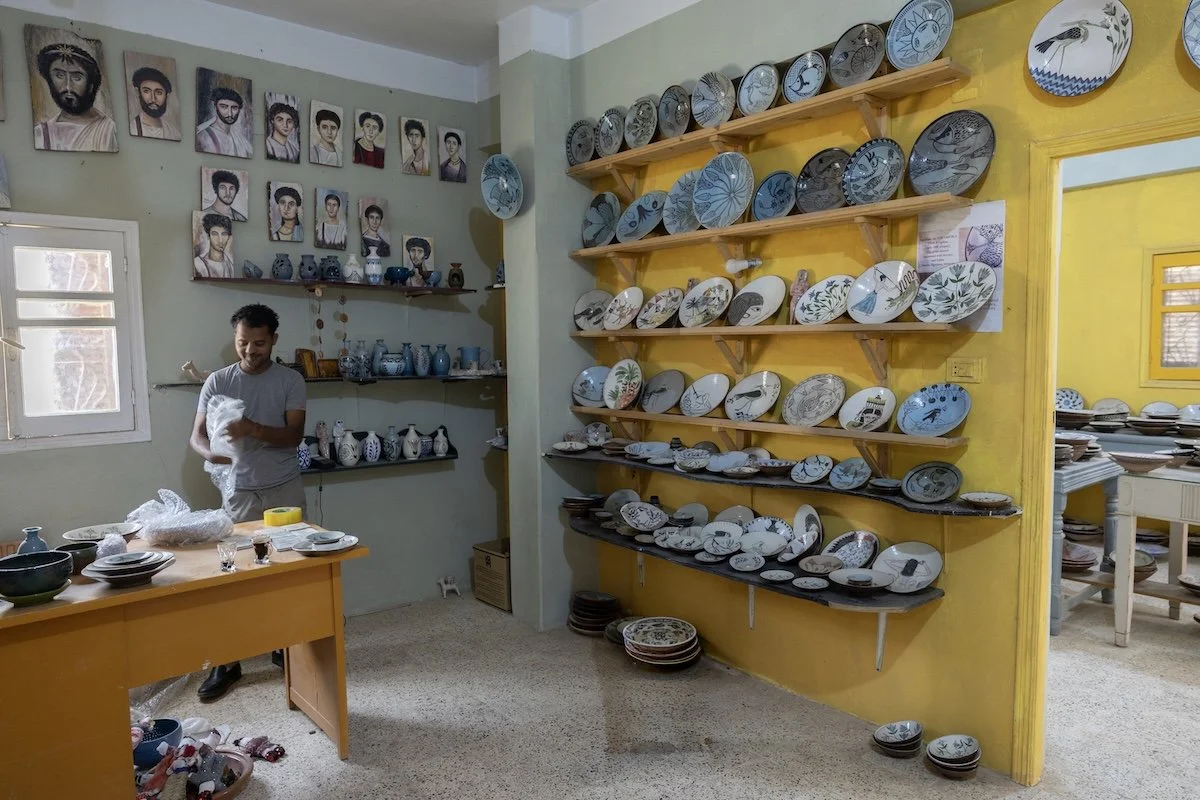
Mamdouh picked me the next morning suggesting that on the way to visit Howard Carter’s house on the west bank he would take us to a pottery. Komsan Abdo is a young potter who not only makes pottery but also gives workshops. So of course I tried my hand at turning a bowl on the potter’s wheel… with much help from his young apprentice! I naturally bought a few items and although they are beautiful I don’t use them often because I’ve found them to be very fragile.
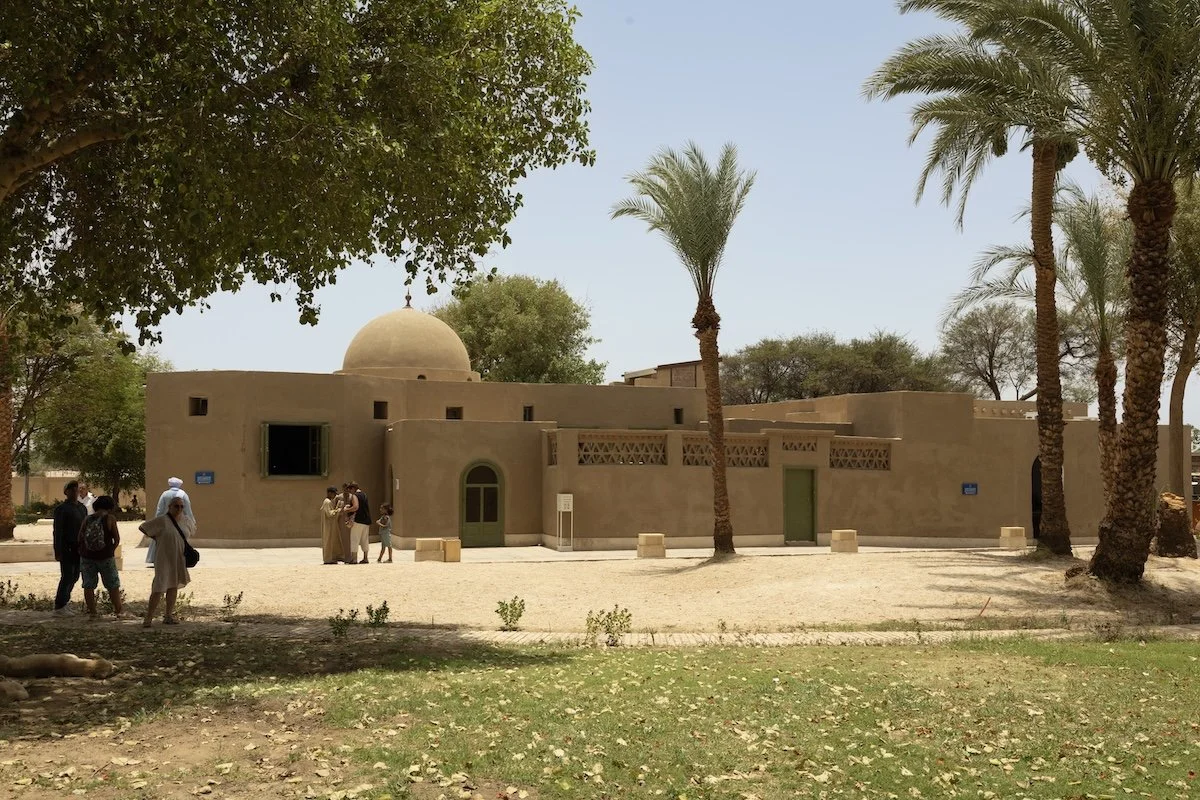
Howard Carter’s house was well worth the visit, not only for the historic interest but because this is where the facsimile of Tutankhamun’s tomb is. I also loved the truly beautiful water-colours by Carter himself and members of his family.
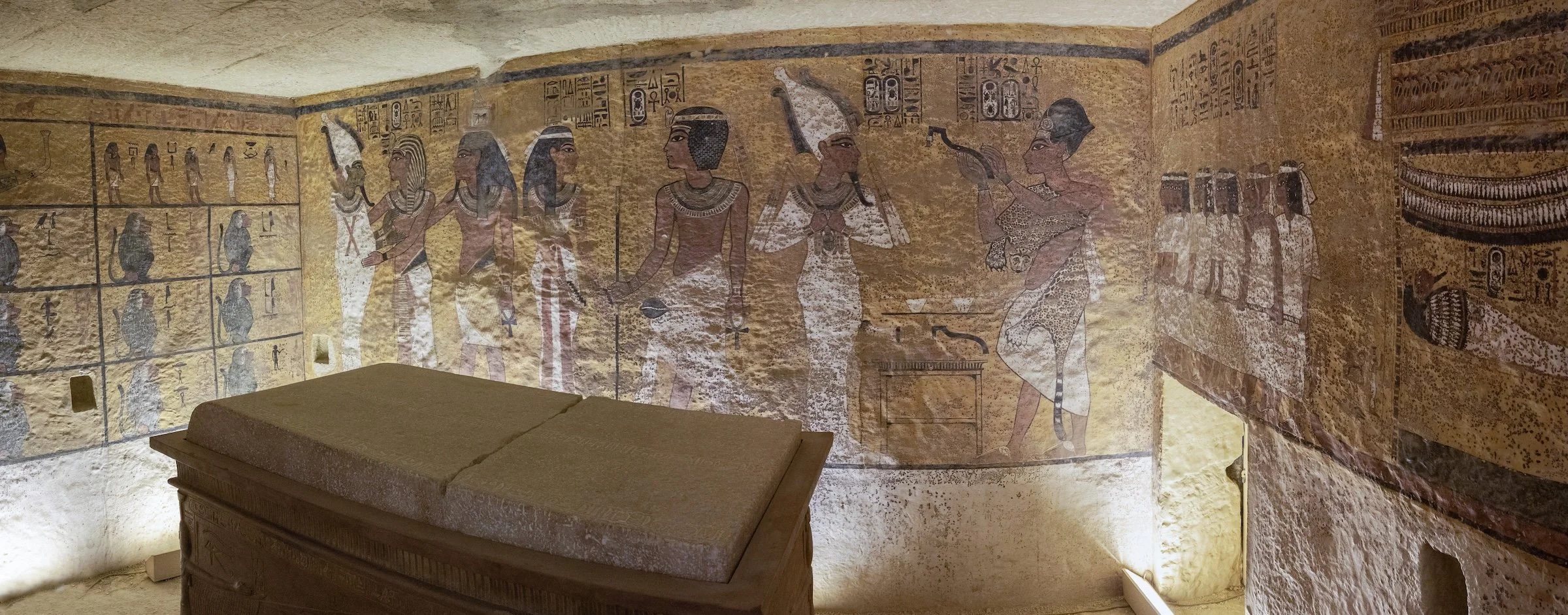
In the grounds of Howard Carter’s house is the facsimile of Tutankhamun’s tomb made by Spanish company Factum Arte with the support of Egypt’s Supreme Council of Antiquities. It was offered to Egypt by the European Union in 2012.
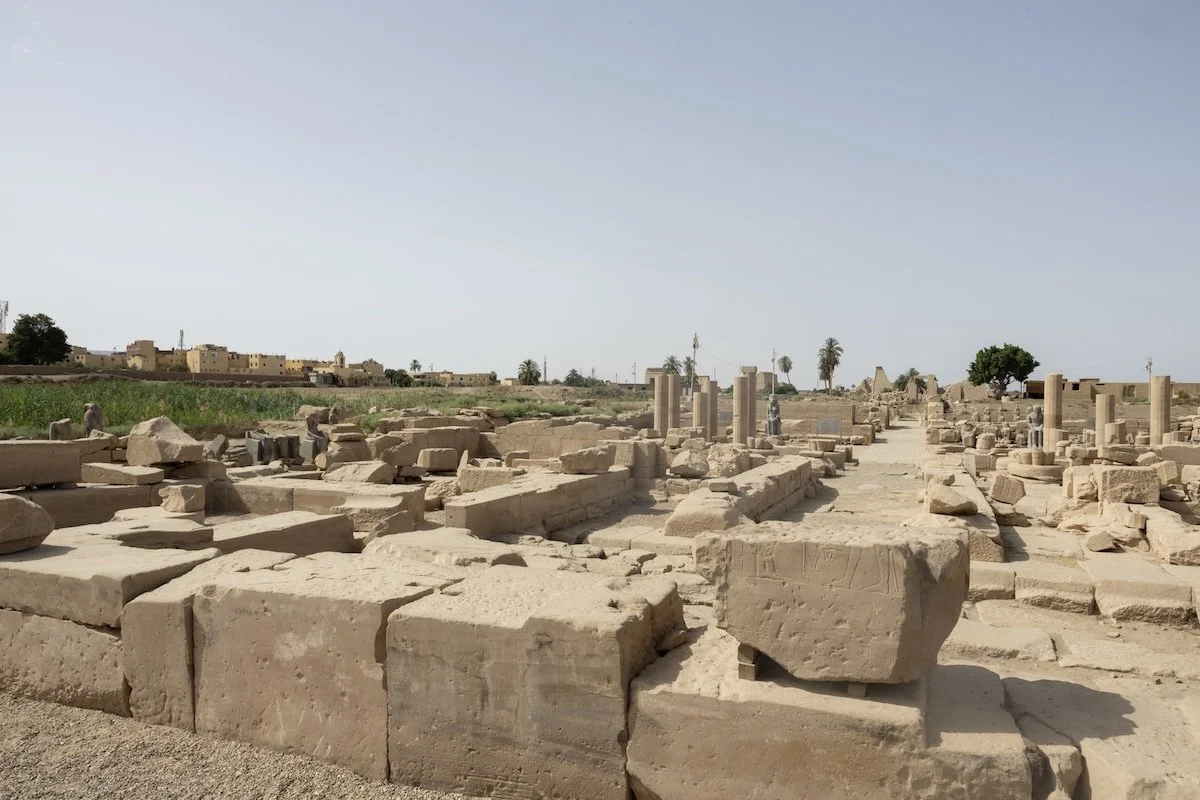
The temple of Mut
The afternoon was spent at the Temple of Mut, nestled in the hollow of a crescent-shaped pond on the right-hand side at the Karnak end of the Avenue of Sphinxes. Sadly, restoration work on this site came to a sudden halt when Donald Trump dismantled USAid so the pond is completely overgrown by reeds, the information panels are dusty and fading and the whole site is in a very ruinous state. Despite the proximity to Karnak temple we were the only people there. If Mamdouh hadn’t been with us to explain things we would most likely have just had a quick walk around (despite the heat, a balmy 45°C) because it’s very hard to understand what you’re looking at without an expert to tell you.
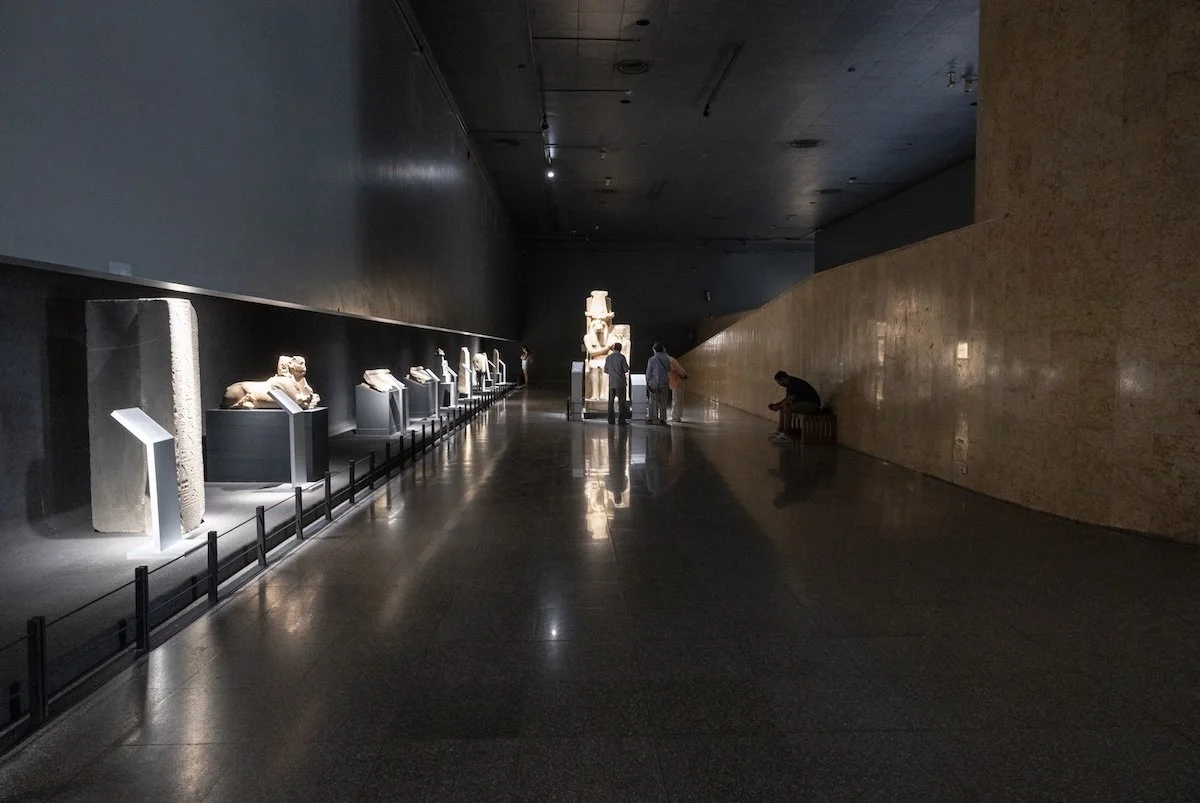
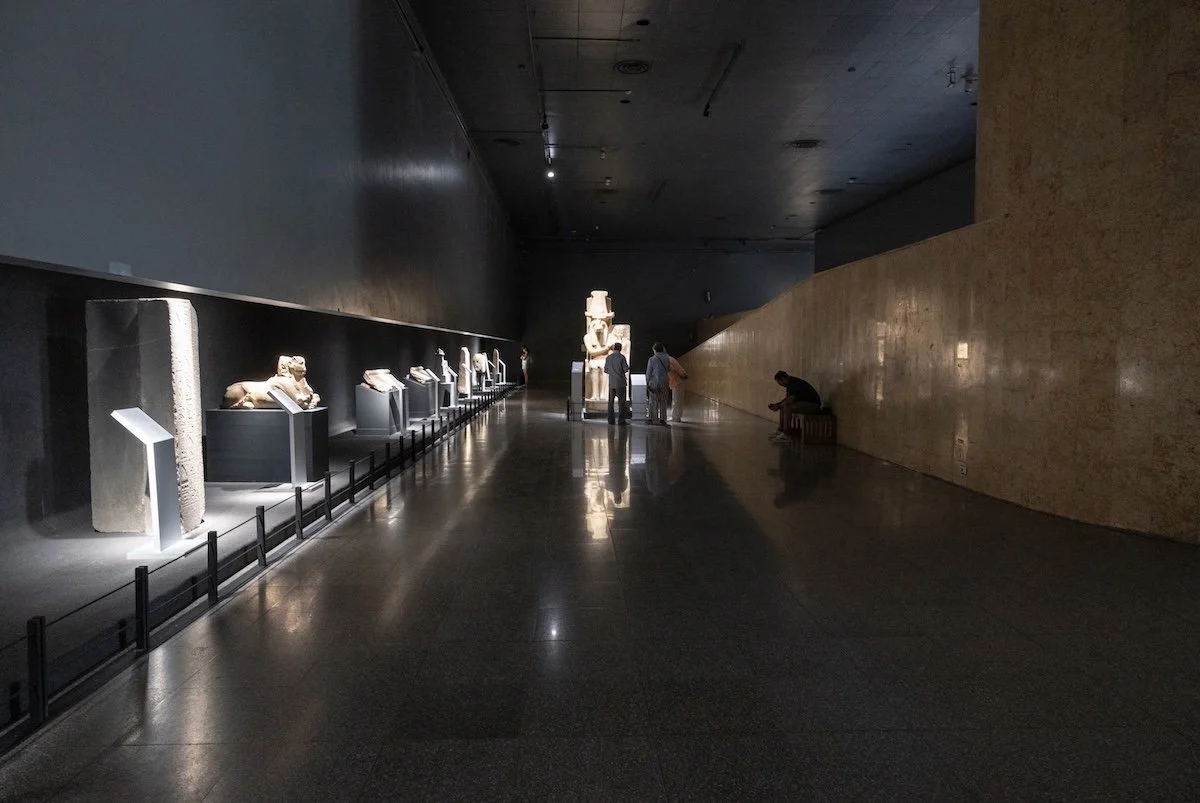
Luxor Museum
By that time the Luxor museum had re-opened after its midday closure (between 14:00-17:00) and we were able to appreciate the cool, spacious, uncrowded interior where every statue and artefact is given plenty of space. They could however be given a bit more light because it’s really dark in there which makes it very difficult to take photos.
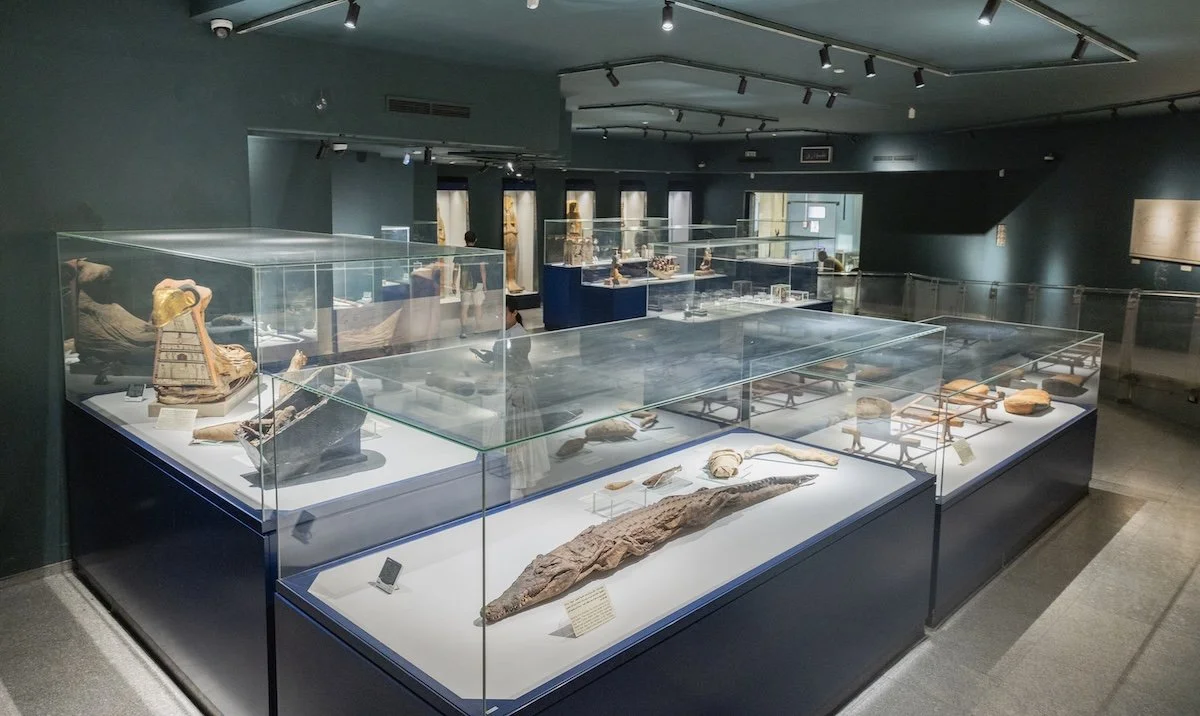
The Mummification museum was a bit of a disappointment. I was expecting something much more scientific, hoping to really learn how the ancient Egyptians went about the mummification process, how it had been developed, what they used etc. But the explanations in this tiny museum are supplied with simple drawings on the walls (along a ramp to the left of the entrance) which put me in mind of a comic strip!
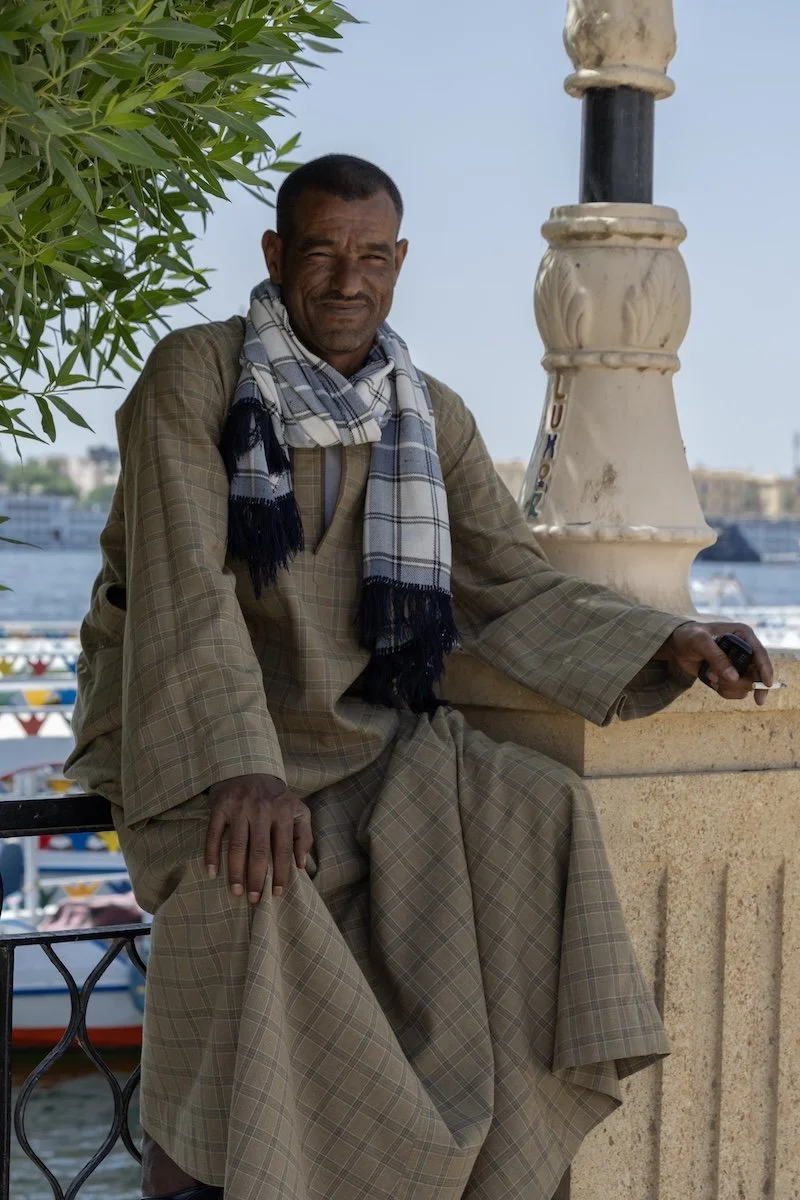
Azab
By evening of the second full day we’d walked up and down the east bank corniche several times, I’d taken the ferry across the Nile from the east bank to the west half-a-dozen or more times and become friendly with Azab the boatman on my way to the ferry terminal, we’d avoided the souq, argued with a young boy driving a horse-drawn carriage who was trying to charge me three times more than we’d initially agreed and generally felt we’d got a bit of a feel for Luxor and were ready for our cruise. More on that in another post.
*the tombs in the Valley of the Kings are indicated by the letters KV (or QV for those in the Valley of the Queens). The numbers which follow were the idea of John Gardner Wilkinson who in 1821 numbered the 21 tombs known to him in the Valley of the Kings according to their location, starting at the entrance to the valley and then moving south and west. Tombs that have been discovered since then have been allocated a sequential number.